 Hi, I'm Heidi and I homeschool my two sweet kids. I want them to know that learning is an exciting lifelong adventure! We love great books, unit studies, notebooking, lapbooking, and hands-on learning.
I’m Liking Lichen
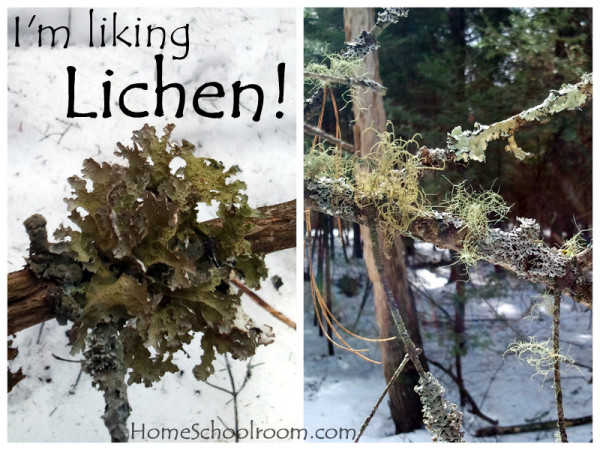
Pretty cheesy pun, I know, but I am suddenly appreciating lichen after years of never giving it a second look. Lichen is so prevalent that it seems ordinary, and I’m guilty of not taking the time to really observe it or point it out to my children. But, as with many things in nature, the more I pay attention the more fascinated I become! Participating in the Outdoor Hour Challenges with Barb from The Handbook of Nature Study blog encourages me to study topics in nature I may overlook.
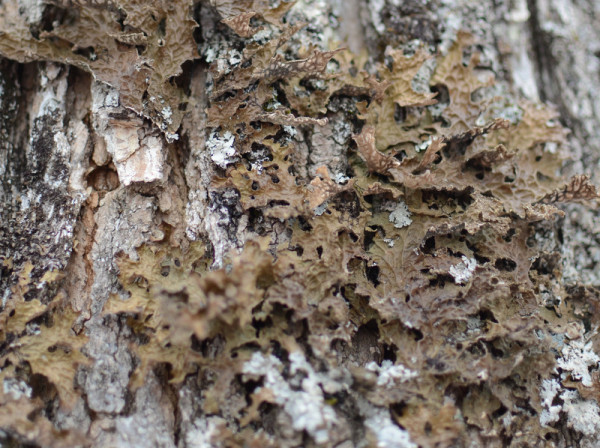
Luckily even in Maine where the ground is still covered in snow like it is this March we can find lichen. We walked in the woods and were surprised at its diversity. I grabbed a couple branches from the ground with samples to bring home.
Since I had never paid much attention to lichen coming into this study I felt like Barb did in her post about moss and lichen back in 2008, when she said she had to do more research and observation for this study because she was so uneducated about it. The information on lichen in the Handbook of Nature Study book was uncharacteristically slim, but Barb’s newsletter had a very useful page on the three kinds of lichen that I printed and kept on our nature table.
I also found two helpful videos. The first video from Science Friday helped us understand what lichen is–actually three different organisms (fungi, algae and bacteria) coming together to make a composite organism that can survive in almost any environment.
{As an aside, I love their videos. Science Friday is a two hour radio show on NPR, but they also make short videos. All of the ones I’ve watched so far have been wonderful! They are concise, the narrator speaks clearly, and they always talk with an expert in the field–in this particular case a lichenologist. Check out Science Friday’s YouTube channel, I think you’ll love it!}
The second video is from Clemson University’s extension program, and it describes the different varieties of lichen and what lichen needs to grow.
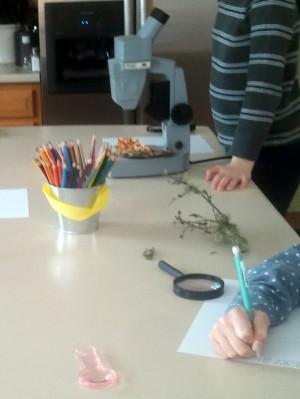
After the videos we inspected our samples with magnifying glasses and a stereo microscope, making drawings for our nature journals.
My son’s page cracked me up. He really enjoyed the Science Friday video and the cartoon they used to illustrate the different components of lichen (you can see the characters at the very bottom of his drawing).
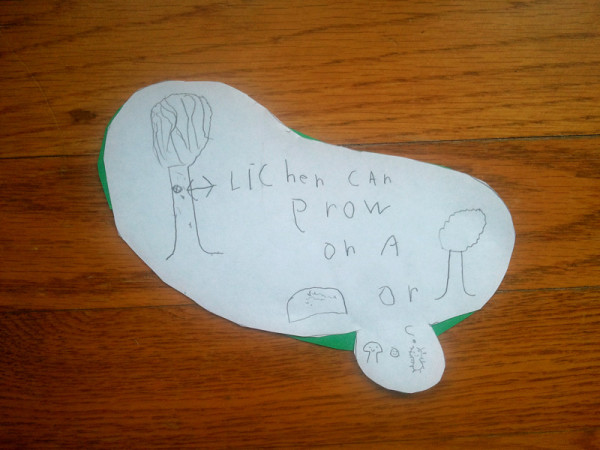
(Notice the question mark over the bacterium because they aren’t sure what it’s purpose is.) He also then took his drawing into another room to secretly cut it out and back it with green paper because “he knew I’d like that.” He knows his crafty mom likes it when he spends time making his work detailed.
We learned quite a bit, and I’m already noticing us paying a lot more attention to lichen when we’re out and about. Touring a sugar bush for Maine Maple Sunday found us also pointing out interesting lichen samples.
Next I hope to learn a bit about moss, since we can still find samples above the snow. I plan to copy Barb and bring moss in for our nature table, and I like her printable for moss observations.

Any one else working to keep nature study going in a long northern winter?
Explore U.S. Geography with Snapshots Across America
Who doesn’t love learning through games? The Snapshots Across America board game is our favorite way of sharpening our U.S. geography skills. You can read my full review of Snapshots Across America at Curriculum Choice.
Iditarod Unit Study

A quick mention on the news late last week piqued our interest about the Iditarod, the famous dog sled race that crosses more than 1000 miles of Alaska in honor of a historic and heroic race for serum to save a town. I compiled a unit study and we worked on it a bit every day this week. I didn’t set aside our regular work, but with something they were so interested in I could use it as a fun way to finish off our days when all the other work was done.
Resources for our Iditarod Unit Study
Books
- Racing the Iditarod Trail by Ruth Crisman was our nonfiction resource book.
- The Bravest Dog Ever, The True Story of Balto by Natalie Standiford
- Togo by Robert J. Blake is a must read along with the Balto book, it gives the account of another dog hero of the famous 1925 serum race–Togo actually traveled 5 times more miles than Balto.
- Akiak, A Tale From The Iditarod by Robert J. Blake is a story of a modern Iditarod race dog.
Videos
- Discovery Channel’s Iditarod: Toughest Race On Earth: This Discovery channel 6-episode show gave us a front-row seat for the race, up close and personal with mushers and their dogs, both on the trail and at checkpoints. (We were able to watch on Netflix.)
Online Resources
- Homeschool Share: I used a few minibooks about Balto from a unit for Five True Dog Stories. For others topics I used blank minibooks from Homeschool Share’s lapbook resources page. I used Google image searches to print photos of Balto and Togo with their mushers.
- Iditarod Official Website: There is a lot of great information here for the current year’s race–musher profiles, race times and winners, and even news stories (like the death of one of the dogs this year). Note: This site raises money through paid “Insider” subscriptions so some content is not free. There are a few videos for classroom use that are free and a free downloadable map of the race trail.
- About.com has free coloring pages, word searches and crossword puzzles.
- Scholastic has a great Iditarod page with pictures and information–much of it from real Iditarod mushers!
A Peak Inside Our Iditarod Lapbooks
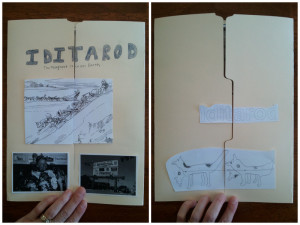
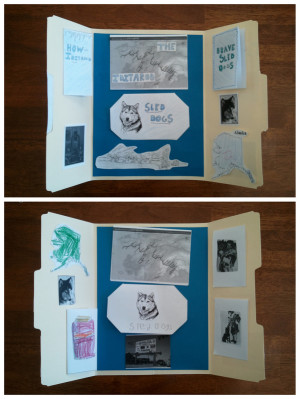
The information in the minibooks:
- The history of the Iditarod, both the 1925 serum run to save the residents of Nome from a diptheria outbreak, and the two sled dog heroes, Togo and Balto.
- The modern Iditarod Race
- All about sled dogs–their training and how they are cared for on the trail.
We enjoyed learning about the Iditarod and look forward to following the race in future years to cheer for our favorite mushers!
Thank you to the wonderful hostesses with fun link-ups on Fridays. Be sure to join the fun and see what other homeschoolers are up to!



Hands-On Math: Practice with Tally Marks
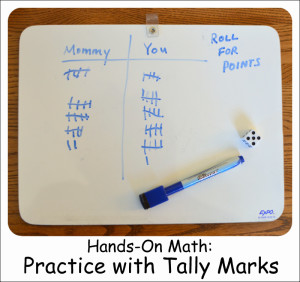
Simple supplies are all you need to practice with tally marks. We used a whiteboard (though pencil and paper would work) and a single die for a quick and easy game that provided lots of practice making tally marks, adding to existing marks, and counting up tallies. (Bonus math: practice counting by fives!)
I avoid a workbook style math curriculum for my son, after realizing in Kindergarten that it did not suit his learning style. We use the Life of Fred Elementary Series and an old series of books called I Love Math.
Life of Fred works well because the books focus on understanding math concepts, are based on funny stories, and each chapter only has a handful of questions. The I Love Math series (only available used) also contains stories, along with games, word problems, and suggestions for hands-on activities.
As needed I find extra hands-on practice for math concepts: like playing store for coin recognition and dividing items for even and odd.
We read about tally marks in I Love Math: How Do Octupi Eat Pizza Pie and I realized a little practice was in order. The book suggested counting straws, but I figured a little competitive game would be more fun.
I grabbed a die and small white board. I told him the simple rules: we take turns rolling the die, whoever gets to 25 points first wins! I kept tallies for the first game. On the second game it was his turn to keep track of our scores. (He decided the game needed a name, so we worked together to pick “Roll for Points.”)
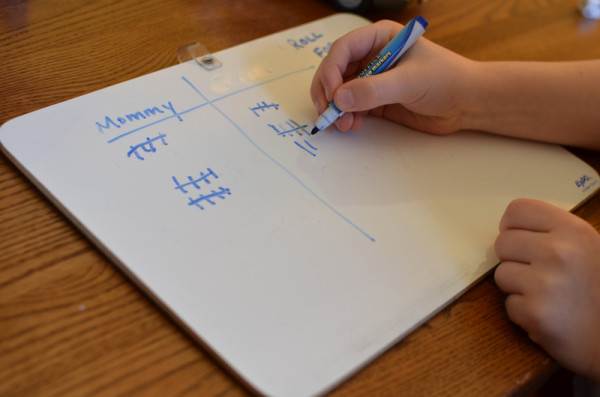
This game is quick and easy, so we’ll play it once in a while until he’s a pro with tally marks. Maybe later we’ll add extra dice, make the point goal higher, or even add the numbers on the dice together!
What are your favorite math games, whether it’s one you bought or made up yourself?
Schoolwork, Sickness and Sewing
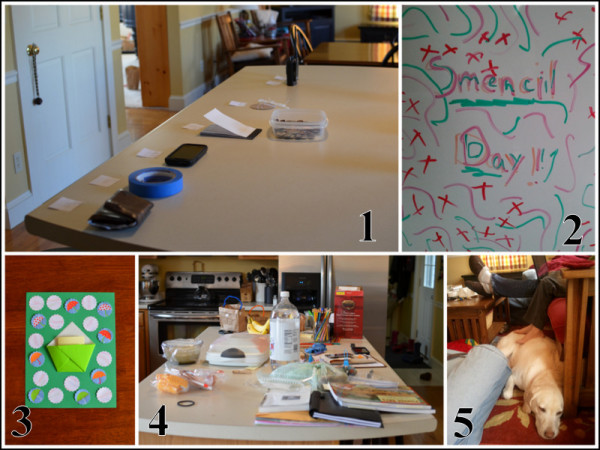
In our homeschool this week:
- I changed up the store game I frequently play with my son. I told him HE would be the storekeeper, and had to label items with prices. The catch: I would be trying to cheat him, so he had to really know his coin values! He loved this new twist.
- The kids declared Tuesday to be Smencil Day, announced on our whiteboard. It cracked me up–I’m known to love a good theme and will randomly declare it something-or-other day if we’re doing a few things that go together. I had told my cautious daughter that she should go ahead and use the Smencils (scented colored pencils) she received for Christmas instead of saving them forever, and little brother was happy to join her in making it an event. I allowed all schoolwork to be done in Smencils. Embrace the small joys!
- My daughter published another Writeshop project. This lesson was on Haikus and my daughter wrote one about spring. (My full review of Writeshop is in the works.)
- Does any one else have a counter that looks like this in the middle of a school day? Please say yes.
- Martha Dog is a sweet, sweet dog. She’s happy to stand in as a footrest during my son’s reading lesson. These moments make up for those others, like when she attempted to chew into her food bin this week to get at the 40 pounds of dog food.
I was happy with what we accomplished considering I was dragging with a nasty cold. It settled into my chest and disrupted my sleep all week. Thank goodness for audio books (Wind in the Willows free from Librivox) as I sipped hot tea! My daughter helped fix snacks and said “bless you” when I coughed (which was a lot!), my son cuddled (a rare event) and rubbed my back. It warmed my heart to see them as sweet caretakers.
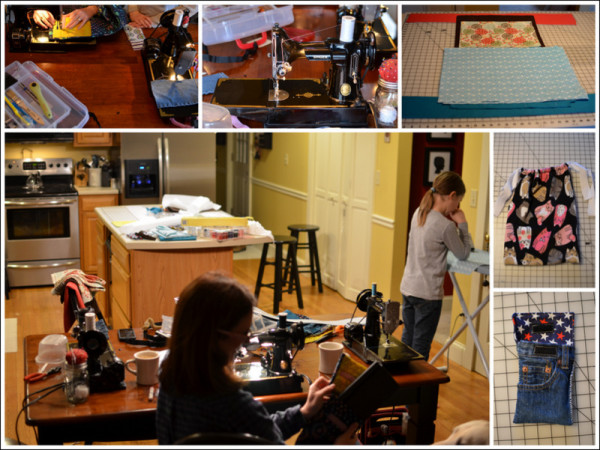
Thursday Auntie came for a sewing day. We usually do these on a Saturday (with a name, of course: Super Sewing Saturday), but she had a rare afternoon off from work so we took advantage. I was struck by so many things to be thankful for:
- Flexibility: How often do I say this? A lot! When the option to sew with Auntie came up, I could adjust our schedule. We got our core work done and will finish the rest today–an adjustment my daughter was happy to make.
- Sewing: It teaches valuable skills to my daughter, gives her a sense of pride, and is an activity we can share even in the years to come. Handicrafts of all sorts can fit the bill, sewing just happens to be our favorite.
- A sewing mentor: Sometimes when Auntie comes to sew with us she doesn’t get as much done on her projects because she’s helping us. She teaches us a lot, always has cool new tools for us to try, and also makes it a whole lot more lively and fun.
- Our sewing machines: We’re blessed to each have a Singer Featherweight–a sewing machine made over fifty years ago. Picked up at auctions, we treasure these little beauties that hum along and are a thing of beauty. (At least to sewing dorks like us. We call ourselves the Featherweight Fan Club.)
- My husband: My husband returned home at 7:00 AM from his 24-hour fire department shift. He made us a delicious chili for lunch and ran out to get pizza for dinner. And he didn’t say a word when we had to eat at the coffee table because every other surface was covered in sewing supplies. He’s a keeper.
My daughter sewed another project from her Kids Can Do It: Simply Sewing book (a fleece bag to bring to sleepovers), I made a case for my son’s iPod out of an old pair of his jeans, and we started work on a tote bag. A productive day!
Today we’re embarking on a last-minute interest-led study of the Iditarod after seeing it on the news this week. I’ll share the details and pictures when we’re done!
Other things from this week:
- I shared about a sanity-saving daily habit of Quiet Time. (Extra helpful when Mommy is sick.)
- I joined with other bloggers of iHomeschool Network to share some of the reasons why people think they can’t homeschool–and how we make it work! One of my fears before we took the plunge was that I can’t homeschool because then I wouldn’t have time for anything else!
Thank you to the wonderful hostesses with fun link-ups on Fridays. Be sure to join the fun and see what other homeschoolers are up to!
I Can’t Homeschool Because Then I Wouldn’t Have Time for Anything Else!
The bloggers of iHomeschool Network are getting together to write about some of the common reasons people give for why they couldn’t homeschool…maybe even reasons we had ourselves before we took the leap.
The biggest argument against homeschooling for me (you know, back when I thought only crazy people homeschooled) was “I’d teach all day then plan all night to be ready to teach the next day!” What I meant was: I can’t homeschool because then I wouldn’t have time for anything else!
Here’s what I’ve learned about accomplishing the homeschooling and household duties while still making time for me.
Accomplishing the Homeschooling
My first reality check: I don’t need to be teaching all day. I looked hard at the public school day, a schedule I was familiar with from years of volunteering. I started with their six hour school day and removed the time that the kids were waiting for the next activity or for their classmates to be ready, moving from place to place, having lunch or recess, or in independent reading time.
This is where I’d also like to put in a plug for the efficiency of homeschooling. My daughter picked up math concepts easily, but would still need to listen to more lecture and practice examples for the students who didn’t yet grasp the concept. At home, we can move right on. But I digress.
Working diligently after a prompt start in the morning we can be done our core work (and even some of the extras that don’t happen in public school) before lunch.
As far as planning all night, there are many time saving resources for homeschool teachers.
- There are open-and-go curriculum options. With some everything arrives in one box–you open the teacher’s guide and use it as directed. I won’t give specific recommendations here, because I’m not an expert in any of them. I lean towards curriculum with a bit more teacher involvement, tend to do a fair amount of tweaking, and even put together my own unit studies. Even so, an afternoon once a week is sufficient.
- Some options for home instruction are meant for the child to work through on their own. There are even computer-based programs that do the instructing. We use Teaching Textbooks for math, and this computer-based math curriculum does the lecturing and grading for me.
- Not all instruction must happen separately–a point that is especially important for large families. Other than reading, language arts, and math the rest of our subjects are done together. Many homeschool curricula give options for younger and older children.
Now that I’ve discussed the fact that it really isn’t teaching all day and having to plan all night, I’ll cover some of the other things to do that worried me before taking on this gargantuan task of educating my children.
Accomplishing Household Duties While Homeschooling
With the hours spent homeschooling, how does one accomplish housework, meal preparation, and running errands? This may be the greatest part of homeschooling. Really, I’m not kidding! Don’t think of it as “How will I get all this work done while trying to teach and plan for homeschooling?” Think of it as bringing on extra employees in the household business.
Homeschooling provides wonderful opportunities for life skills training. Public school children rush off to school in the morning, then return to find the house clean, the fridge stocked, and their clean clothes in their drawers. They often aren’t given many chores because they spend their after school time in extracurricular activities or doing homework. Instead of the household fairy doing all the work while they are gone, my children see and help with all the tasks.
- Cleaning: We have short morning chores to tidy the house, longer afternoon chores to clean something, and bigger jobs on the weekend. I put on music and call for a ten-minute tidy when necessary, instead of doing a whole-house pickup after they leave for school or go to bed.
- Cooking: Meal preparation provides practice for many skills. We start with helping to measure and stir, move to preparing easy recipes alone, and add working with heat and sharp tools. It helps the family, is a learning experience, establishes a necessary life skill, and gives them pride as others benefit from their work.
- Errands: Shopping together provides many opportunities to talk about wants and needs and financial management.
Not only does participating in these tasks help get the work of the household done, we are preparing our children for leaving our house and running their own household.
Finding Personal Time When You Homeschool
So how about all the other time a mom needs? I’ve discovered that homeschool isn’t all drudgery, and that you can–and must–make time for other things.
Though being a homeschool mom is a lot of work, I’ve learned that the work is rewarding. In addition to helping my children grow and learn, I am learning along with them! Our history, science, nature, composer, and artist studies engage my brain, too. Not to mention the great books we enjoy together!
Now for things other than homeschooling and housework–and I encourage you not to neglect these areas. It is good for your children to see that you are a person and not just a caretaker. You need time with your spouse, time with other adults, and time alone. You need time to work, pursue personal goals, or just relax. The advice to take care of yourself so you can care for others applies to homeschool moms. You do have to carve out time and make it a priority. There are several ways I structure me-time into my day.
- I take the first hour of the day to myself. Both my children know if they rise early to occupy themselves and let Mommy have her coffee. (Maybe you’re a night owl and staying up late would work better.)
- Don’t forget recess: instead of 15 minutes outside with teachers necessary to watch, I send my kids out and let them play as long as they want.
- A daily habit (and probably my favorite) is Quiet Time, a blessed hour to myself in the middle of the day.
- I also maintain bedtimes. As my children have gotten older we haven’t pushed bedtime later. We simply allow them more time to wind themselves down in bed reading or listening to audio books. Everyone benefits from these periods of quiet time in our day.
Another helpful part of our schedule is a four-day school week. This works because of our year-round schooling and gives me a three-day weekend. Here’s something I’ve noticed, too: because we’ve been working together and engaged all week, my kids are often ready to play together and work on their own personal interests.
Time with your spouse is crucial because your relationship is the foundation of the home. Early bedtimes provides time alone with my husband. We also drive an hour to Grandma’s house and the kids play with her for the afternoon while we go on dates. I encourage you to get creative if you, like us, don’t have the money for babysitters: try family members or swaps with other couples, or at the least at-home dates to give you that time with your spouse.
Time with other adults has actually been easier than I thought. I find that other moms in the same position are looking for adult interaction, too! There are many homeschool events and opportunities even in our small town. Field trips, co-ops, or simple visits are all times to socialize and support each other.
Homeschooling Is Worth It
I am happy to say I was wrong that I wouldn’t have time for anything else if I homeschooled. Not only is my time well spent, but with some creativity I carve out time for myself and my whole family is thriving in this lifestyle.
Be sure to visit iHomeschool Network, where you can be encouraged by experienced homeschoolers. Don’t believe you can’t homeschool because you’re not patient enough or organized enough, or because you don’t have a degree, or you want your kids to play sports, or you still have babies and toddlers. There are numerous myths and we’re all living proof that:
Homeschooling is possible and you can do it!
Quiet Time, Oh How I Love Thee!
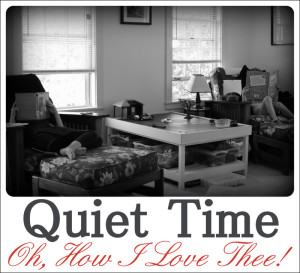
One of the biggest challenges for me when I began homeschooling was the sheer amount of talking and interaction required. Though I was accustomed to having both children home all the time in the summer, teaching them for hours left the introvert in me a bit drained by afternoon. As the rest of the day loomed before me I fondly reminisced about afternoon naps.
There were days when my ears actually hurt and even the sound of them playing in the next room was stressful. {This is when those of you with double or triple the number of kids I have are laughing–I know, I’m a wimp.} I also noticed frequent squabbling during afternoon play because they had been together all day, too!
Enter a homeschool mom’s secret weapon: Quiet Time. The first wise, experienced homeschool mom to reveal this delightful idea to me was Tricia at Hodgepodge. (I always pore over her blog soaking up her wisdom.) I also read a great post from Jamie at The Unlikely Homeschool with her version of quiet time.
I realized this would save my sanity. We tried various arrangements of locations and activities and I nailed down my goals for quiet time (other than just a few blessedly quiet moments to myself). We now have a plan that works for us.
One Hour of Quiet
Quiet time lasts one hour, per Mommy’s timer. Do not ask how many minutes are left. Just remain in your quiet spot until you hear the beep.
The supreme rule of quiet time is that you must be quiet. No talking–especially not to Mommy. I play classical music from our composer of the month during quiet time. The two benefits: my children hear a lot of wonderful music, and it serves as a reminder that this isn’t the time to talk to your family members. (Even if you just saw a picture of a really disgusting bug or wrote the funniest part of your story.)
You must gather what you need before quiet time to prevent getting up during the hour. You may choose the comfortable spot to spend the hour and surround yourself with pleasant, quiet activities.
You must spend some of the time enjoying a good book: my ten-year-old daughter is required to read one chapter, my seven-year-old son must look through one book or listen to an audio book.
We try to fit quiet time in most days, though it often only works on the days we don’t have outside engagements. Sometimes it happens in the early afternoon, sometimes when we return from an errand or meeting, and sometimes I pull it out in that pre-dinnertime hour (especially if Daddy, our chef-in-residence, is home to prepare the meal).
The Quiet Cupboard
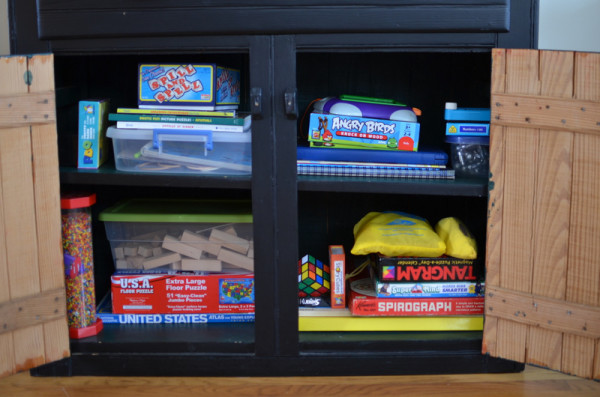
The first day I implemented the “Quiet Cupboard” my kids couldn’t wait for quiet time. The simple idea of arranging an assortment of quiet-time-permissible activities inside a cabinet piqued their interest. The lower shelf has activities good for either child, the top shelf has one side for my daughter and one for my son.
They are welcome to choose things that aren’t in the cupboard but they both gravitate toward the chosen activities. I try to switch it up over each weekend. No massive overhaul needed, just a few changes. They continue to look forward to seeing what’s in the cabinet, and the variety of activities they engage in has increased since the quiet cupboard’s introduction.
What Goes Into the Quiet Cupboard?
Well, the ideas are practically endless, but here’s what you’ll find, on a rotating basis, in our cupboard:
- 1-person games:
- Scrabble Flash
- Spill and Spell
- Chocolate Fix
- PDQ: The Pretty Darn Quick Word Game
- Bananagrams (the tiles can be fun to play with, my daughter makes intersecting words on a theme for fun)
- Rory’s Story Cubes
- Tangrams (we use an old page-a-day magnetic calendar)
- Supermind
- Find It
- Puzzles (I especially love to slip geography puzzles in here)
- Blocks: our Legos are out constantly, but I’ll put other smaller block sets in here like Lincoln Logs or Tinkertoys
- Clipboard with paper and pencils–these can be used with some of the activity books or by themselves for drawing or writing
- Activity books:
- How to Draw (fill in the blank) books: we have ones for animals, people, and even military vehicles!
- Mazes
- Crossword puzzles
- Doodling books: Doodles at Dinner is one of my daughter’s favorites
- Visual search books like Hidden Pictures, Where’s Waldo, or Photo Fun
- Soduku
- Art and craft supplies that don’t make big messes (not the time for ink pads, paints or chalk pastels)
- Stencils
- Klutz books are always a hit: quilling, friendship bracelets, paper airplanes, cat’s cradle, Spirograph
- Do-a-Dot markers
- Card kit: I put together a box with blank cards, fancy edge scissors, and cardstock scraps
- Books: though they can choose a book from anywhere, if I want to draw particular attention to a book I’ll put it in here. Books from the library or home, maybe one with beautiful artwork or photography, maybe one that goes with our season or studies (nature, science, history, art–so many choices!)
After Quiet Time
I can be a little tempted to keep my nose in a book or working on whatever focused task I was doing. But (most days) I resist the urge and jump back into family life. I take the time to admire creations, listen to story lines, or examine interesting finds from our hour “apart.” We all enter our evening refreshed and ready to enjoy each other.
Do you practice quiet time in your home? Share your version in the comments!
*This post contains affiliate links.
Schedule Changes Make Room For Our Priorities
I’ve struggled with feeling over-scheduled since the beginning of the school year. We rarely had a whole day at home, and it was a nagging bother because the days spent at home seemed closer to my core homeschool priorities. We could always get the basics done (the three Rs) but only on slower weeks could we get to the “extras” that matter to me: nature study, hands-on activities, artist and composer studies, time for personal interests.
I made small changes and waited it out, figuring after the holidays during the bleak winter months we’d be glad for the busyness. February arrived and I wasn’t glad, just busy.
I mulled it over, talked with my family, and decided to take out two activities. Each occurred only once a month but required planning from me and school time during that week for the kids to prepare. The problem? The two activities were good activities with nice people, and they depended on the participation of the involved families to keep going.
I notified the groups, and some members were disappointed. I felt sorry and yet that I had done the right thing for our family. This week reinforced my choice.
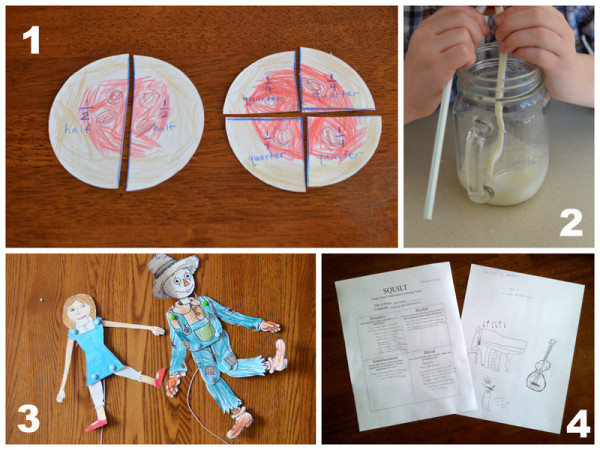
- My little boy loves and needs hands-on learning: here are our homemade (pepperoni) pizza fractions.
- More hands-on learning fun: after watching Beakman (our favorite science show–all episodes streaming on Netflix!) we had to try the Beakman Challenge: sucking from a straw with a second straw out of the fluid. P.S. It’s impossible and it all has to do with air pressure.
- We delved into our history program every day this week. These are our Jumping Jacks, a popular toy from the 1800s. My son colored the printable one, my daughter designed her own.
- One of our “extras” is composer study. We’re working on Beethoven and enjoyed another SQUILT lesson for Fur Elise. Thanks ever so much to Mary from Homegrown Learners for teaching us all about Super Quiet Uninterrupted Listen Time!
My children enjoyed their non-school hours, too.
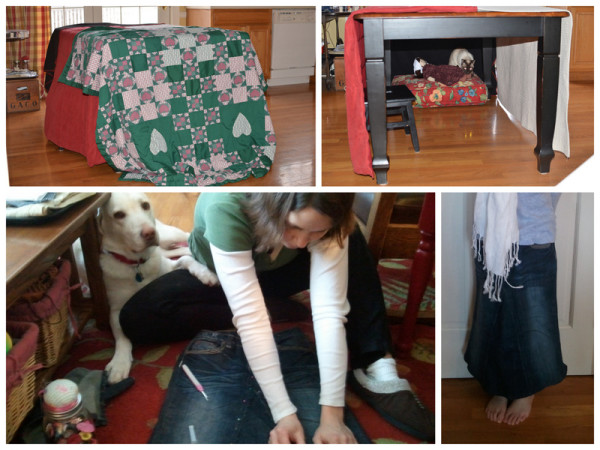
- Imaginative play: The kids built a covered wagon in the playroom, then a claim shanty out of the kitchen table. It even had a quilt for a door like Ma Ingalls.
- Time for personal interests: My daughter completed a sewing project from her book Kids Can Do It: Simply Sewing. She took a photo of lovely me (in my pajama pants) helping with pinning to capture our very helpful sewing assistant, Martha Dog. The completed transformation of jeans-into-skirt was a success and my daughter has basked in many compliments. I love the lessons learned and pride that comes from sewing for her.
- What else? My son practiced until he could do a double-somersault, my daughter did math in her spare time (Life of Fred Fractions–I may be in love but don’t want to judge too quickly), we sorted and delivered Girl Scout cookies, and enjoyed lots of reading aloud, including all of The Twits just for fun. Roald Dahl gives my son belly laughs and I love to share that with him.
Now, this doesn’t mean we’ve become hermits. With church, Scouts, two book clubs and music lessons we’re still on the road many days. But we’ll have a couple more days at home and more freedom to work on our priorities. And a bonus: it cleared up some mental space for me since I had to plan what we would prepare for both events. I need all the mental space I can get!
How is your schedule working this year? Do you have a hard time balancing time at home and outside activities?
Thank you to the wonderful hostesses with fun link-ups on Fridays. Be sure to join the fun and see what other homeschoolers are up to!
A Beautiful Moment
We were in the basement of our small town library for the once a week book sale. My ten year old daughter and her dad were perusing a small wooden bookshelf with old books.

She brought one over to show me because of the beautiful cover. As we read the title, Beauties of Tennyson, both our eyes widened.
Backtracking a bit: we recently finished the Little House series. Those stories have become part of the fabric of our family and we were sad to be done living Laura’s life through her books.
It was a perfectly new book, beautifully bound in green cloth with a gilded pattern pressed into it. The smooth, straight, gilt edges of the pages looked like solid gold. On the cover two curving scrolls of lovely, fancy letters made the words: Tennyson’s Poems.
~From Little Town on the Prairie by Laura Ingalls Wilder
We carefully opened the cover to check the date: 1885…Laura’s time period! My daughter opened it and found “Song From Maud.”
Laura tried to read again her favorite of Tennyson’s poems:
Come into the garden, Maud,
For the black bat, night, has flown,
Come into the garden, Maud,
I am here at the gate alone;
And the woodbine spices are wafted abroad
And the musk of the rose is blown.
~From Little Town on the Prairie by Laura Ingalls Wilder
My daughter’s face flushed as she gingerly held the book in her hands. “You have to get that book,” I said. She left the proud owner of Beauties of Tennyson.
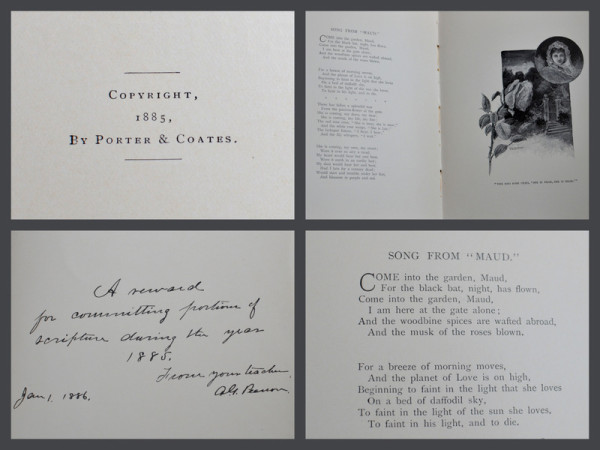
Isn’t it beautiful? Look at the dedication:
A reward for commiting portions of scripture during the year 1885.
From your teacher,
[teacher’s name]
Jan 1, 1886.
What else did we do this week? A lot. Outside engagements every day. Too many errands. Reading, writing and arithmetic. There are times I feel I’m not managing it all very well. We rarely get all the schoolwork I planned crossed off my list. The house gets far too messy. I’m often trying to figure out what’s for dinner at 4 pm. I snap at the people I love most.
But this moment in the basement of the library was perfect.
My growing-up-way-too-fast little girl had tears in her eyes over a 128 year old book of poetry. I must be doing something right. Sharing quality literature, poetry, and music is having an impact on their lives, now and hopefully forever.
I’m going to store this memory, dwell on it, and let it overshadow other less-than-perfect moments.
I’m linking up–click over and see what other homeschoolers are doing.
Hi, I'm Heidi and I homeschool my two sweet kids. I want them to know that learning is an exciting lifelong adventure! We love great books, unit studies, notebooking, lapbooking, and hands-on learning.