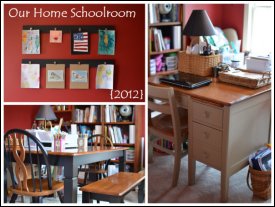
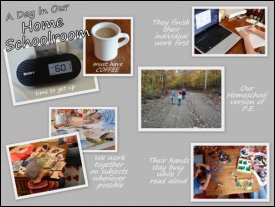
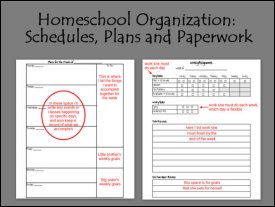
 Hi, I'm Heidi and I homeschool my two sweet kids. I want them to know that learning is an exciting lifelong adventure! We love great books, unit studies, notebooking, lapbooking, and hands-on learning.
Poet Study: Robert Frost
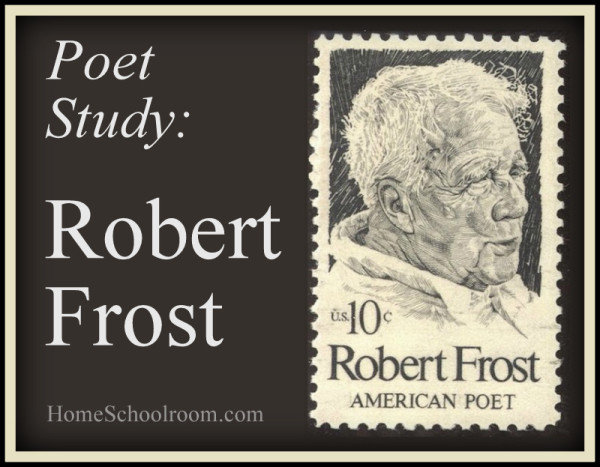
I read poetry to my children regularly. Sometimes I share poems from anthologies and sometimes poems related to the season, holiday, or our studies in nature or history. Other times we focus on one poet, and March is a great month to enjoy a study of Robert Frost, who was born on March 26th, 1874.
Other than the fact that it’s his birthday, and that he’s one of America’s best-loved poets, what homeschooler doesn’t identify with these famous lines:
Two roads diverged in a wood, and I–
I took the one less traveled by,
And that has made all the difference.
~from “The Road Not Taken” by Robert Frost
Getting to Know Robert Frost
Born and raised in Maine, I feel a special connection to his poems depicting scenes of rural New England life. I was amused to find that he was actually born in California! He moved to New England (where his family was from) when he was 11.
Although he was writing poems as a young adult he was not able to support himself as a poet until much later in his life. In the meantime he wrote for newspapers, taught, and farmed (though not very successfully). It wasn’t until he moved to England in his late 30s that his work was accepted by a publisher in Britain. He moved back to America, and ten years after his first book of poetry was published he won the first of four Pulitzer prizes.
Poetry for Young People: Robert Frost has a short biography of the poet. This biography online also has nice information about not just his poetry but also his personal life. I find his life story interesting and worth sharing with my children: there is a lesson to be learned about following your passion even if you aren’t immediately successful.
Getting To Know Robert Frost’s Poems
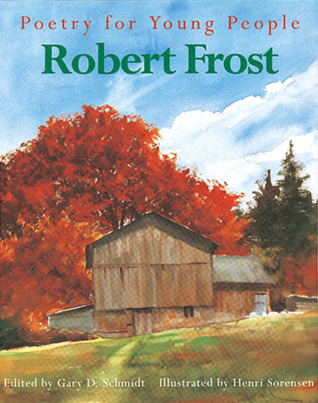
I can’t recommend the Poetry for Young People series highly enough. With the story of the poet at the beginning, and then a selection of poems with accompanying artwork, it is worth adding to your bookshelf. I also appreciate the notes at the bottom of the page that help explain the theme or style of the poem.
Several of his poems have been made into picture books–a perfect way to introduce his poetry to younger children and enjoyed by all ages in our home:
Here are some free resources for enjoying his poetry:
- There are links to many of his poems on the right sidebar at The Academy of American Poets website.
- Librivox has a free audio download of eight poems.
- You can also watch a video of Frost reading “Stopping By Woods on a Snowy Evening.”
Adding the Extras
Reading about the poet and sharing his poems can stand alone, but you can further the learning (or just the fun) by adding in any of these enrichment ideas.
- Jimmie has perfect Robert Frost Notebooking Pages over at the Notebooking Fairy.
- Use one of his poems for copywork.
- Have your child memorize their favorite Frost poem.
- Print a poem and have your child illustrate it.
- The chalk pastel tutorials Tricia posts at Hodgepodge are one of my favorite art resources! Several would go well with the scenes of nature in many Robert Frost poems: To The Woods, Tree Silhouette, Apple, Old Shed in the Snow.
- According to the Robert Frost Farm website, the Frost family served banana pudding topped with chocolate syrup and whipped cream at birthday parties. I’m always game to add food to our studies!
Hop on over and check out other unit studies of fascinating people born in March from the bloggers of iHomeschool Network!
Nature Study ~ Birds
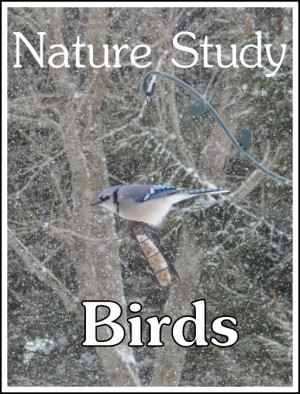
Our nature study has been all about birds for the last 6 weeks. It’s a good winter topic for Maine–they are one of the few living things outside that aren’t covered in snow! We focused on the basic features of all birds and the specific birds that we see outside our window.
Resources For Studying Birds
- Handbook of Nature Study bird posts ~ Barb guides you through nature study, and this is the reference page that links to all her bird-related posts
- Handbook of Nature Study by Anna Botsford Comstock ~ the big black reference book for nature study, I highly recommend having this one on your bookshelf. I use it mostly to educate myself so I can guide our observations in nature, though I sometime read short sections to the kids.
- Birds of Maine Field Guide ~ I highly recommend the state guides by Stan Tekiela. We love this book and it has made it much easier to identify new-to-us birds. The entries are organized by color, so if you see a bird that is primarily brown or blue you can look in that section and find just birds of that color likely to be in your state.
- Burgess Bird Book for Children (available as a free Kindle book) by Thornton W. Burgess ~ I enjoy the Burgess books for children–sweet stories with factual information.
- Everything You Never Learned About Birds by Rebecca Rupp ~ a wonderful book filled with scientific details, hands-on learning activities and amusing tidbits and stories. One of those really fun nonfiction books that works well even as a read aloud.
- All About Birds ~ The amazing online bird guide from the Cornell Lab of Ornithology.
- Nestcams ~ We kept an eye on two nestcams from Ustream: a hummingbird and eagle nest, both with two nestlings. They provided us with a great opportunity to observe things that would be impossible to see first-hand in nature.
The Egg
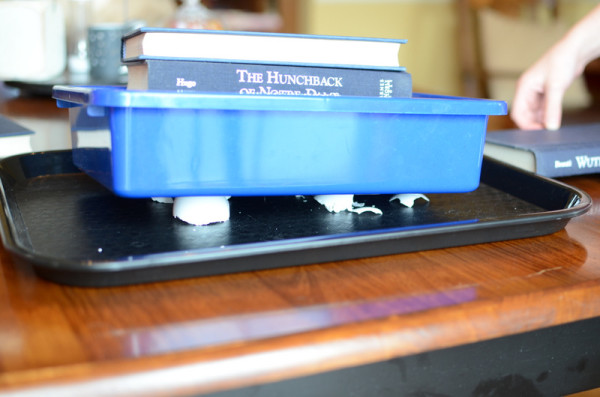
After reading about the egg in Everything You Never Learned About Birds we tried this experiment to see exactly how much weight eggs could hold. I cracked two eggs as close to the middle as I could. (I tapped with the dull edge of a knife to try and break it evenly all the way around.) We placed the empty shells down and tested to see how much weight they could hold.
Even I was amazed when they broke at just over four pounds–roughly the weight of a hen! It seems they were perfectly suited to withstand their mother’s weight. We were able to tie the idea of the strength of the dome shape into our recent visit to our state capitol building.
Bird Bones
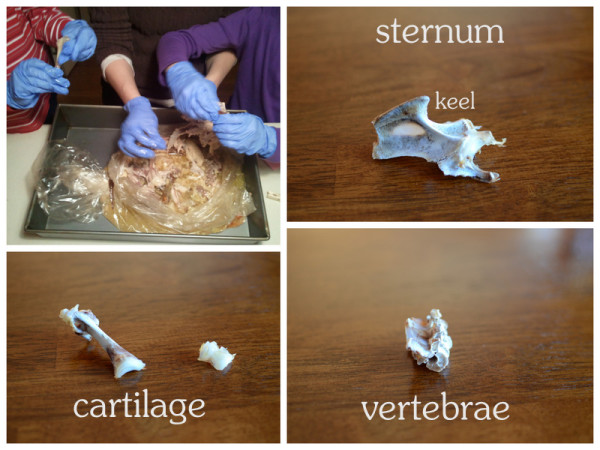
Who but a homeschooling family would have a baked chicken for dinner just so they could examine the skeleton after? I was glad we went through the effort, because even though my daughter was initially horrified at the idea she, too, was interested in all we saw. We were able to spot many things we have in common with birds: vertebrae (and even the spinal cord!) and cartilage. I was hoping to show a cross-section of a bird bone and show how they are lighter and more hollow than mammal bones–but that just wasn’t easy for us to see. The most amazing feature specific to birds was the large “keel” where the chest muscles attach to the sternum. Comparing it to our breastbone (on our skeleton model) the difference was incredible.
Feathers and Flight
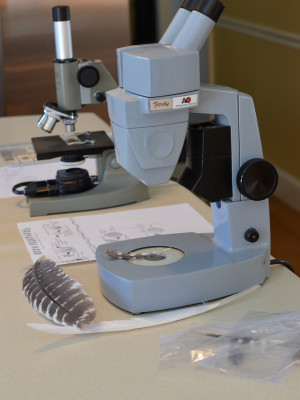
We examined the details of a feather under the microscope. This is the part I love about nature study: the more you learn the more amazed you are with the intricacy of nature! All of us were intrigued examining the microscopic features of a feather, especially the little hooks that keep the parts of a feather together forming a neat fan. (We decided it was kind of like Velcro!)
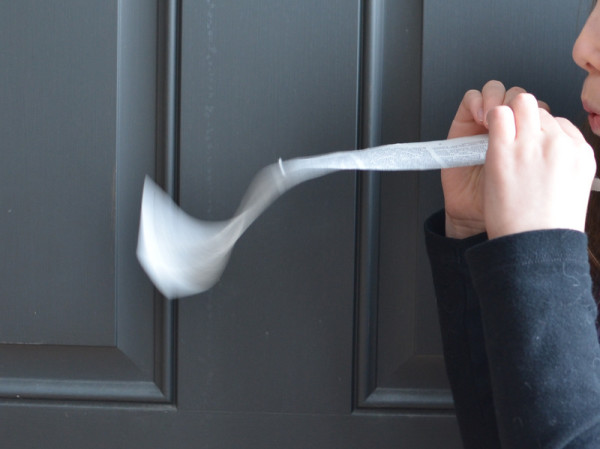
We’ve read about both bird and plane flight before as it has come up in questions from my son. This easy demonstration was one that even I was surprised worked so well and had us all ooh-ing and ahh-ing…and blowing on newspaper until we were dizzy! Simply hold a 3-inch by 12-inch strip of newspaper just under your mouth and blow. It may take a minute to get it just right, but when you do the newspaper will flap upwards. It’s a great hands-on demonstration of lift, more officially known as Bernoulli’s Principle!
Getting to Know Our Backyard Birds
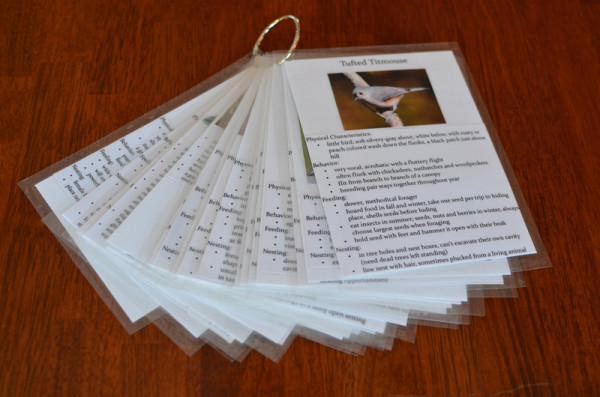
We focused the rest of our time on learning even more about our backyard bird friends. We started our own field guide (Outdoor Hour Challenge #7) last year, and added new birds this year. While I enjoy our growing collection of field guides, I love having our own guide to just our backyard birds. On each card I put a picture and pertinent information, and also add interesting tidbits on the back.
We spent extra time on a few of our frequent backyard birds.
- Barb has a great post about the crow with a video. We can get frustrated with the crows who take all our suet and scare away smaller birds, but after Barb’s post and the accompanying pages in the Handbook of Nature Study (p. 124-127) we had to appreciate their intelligence.
- We have Chickadees, Nuthatches and Downy and Hairy Woodpeckers in our yard. Using information from the Handbook of Nature Study I shared with my children about how these birds comb over different parts of the tree looking for insects and their eggs. The interplay of these species again prompts us to marvel at creation.
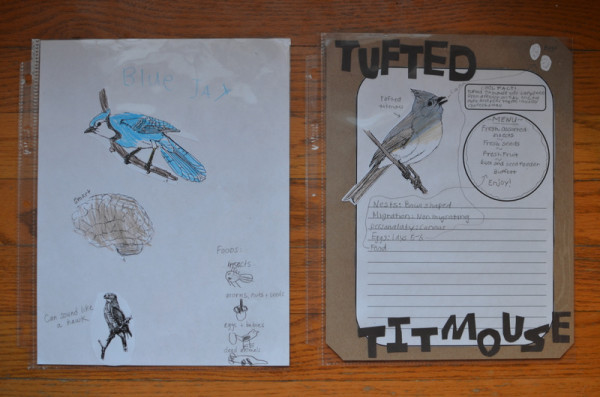
- I had my children choose their favorite bird and create a notebook page. We used the coloring images from the free Cornell bird coloring book, and then I set them free to record the facts they found interesting.
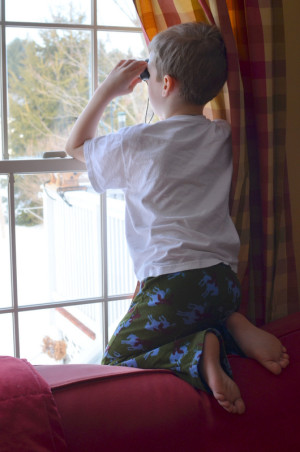
- The highlight of our bird study was our second year participating in the Great Backyard Bird Count. Read over Barb’s post about the GBBC and you’ll be persuaded to become a citizen scientist, too! Here are our 2013 bird counts, with the highest number seen of each species at one time:
- White Breasted Nuthatch: 2
- Red Breasted Nuthatch: 2
- Black-Capped Chickadee: 6
- Dark-Eyed Junco: 3
- Crow: 3
- Blue Jay: 3
- American Goldfinch: 14
- European Starling: 2
- House Finch: 1
- American Tree Sparrow: 2
- Common Redpoll: 1
- Cardinal: 2
- Mourning Dove: 1
I love that even in a small in-town yard we can enjoy these marvels of nature right outside our window. And as with all nature topics, I often feel like we’re just scratching the surface of what we want to learn! Our next goal is to learn the songs of our backyard birds.
I’ll end with this video that blew our minds of starling murmuration. Unbelievable!
I’m participating in Barb’s Outdoor Hour Challenge carnival, head over to her blog for encouragement in your nature study.

Unit Study: The Science of Snow
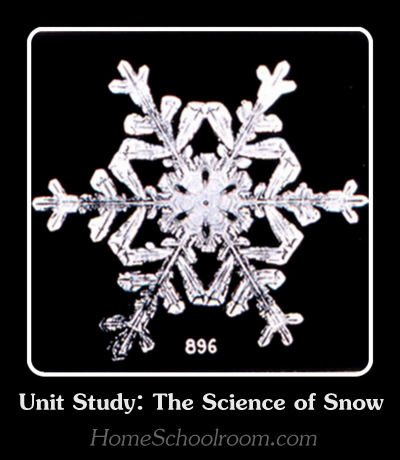
Our local public school was on vacation this week. I don’t usually take those weeks completely off, but they are perfect weeks to drop the regular curriculum and enjoy a fun unit study.
Though some of you may be fortunate enough that late February is the end of winter, in Maine spring is still weeks (months!) away. Great timing for a unit study on snow, focusing on the scientific aspects of snowflakes and crystals. After piquing their interest with the microscopic wonder of snowflakes I wanted to teach them about crystals and answer the question: Is it true that no two snowflakes are alike?
Wow! Snowflakes are miraculous!
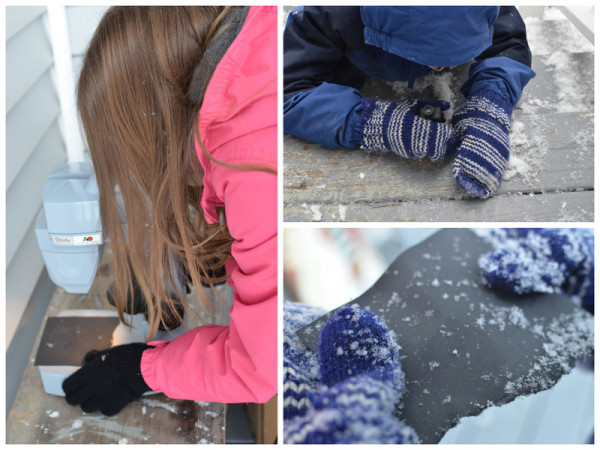
I laid the foundation for their interest a couple weeks ago when I saw large, beautiful flakes falling outside. Grabbing the piece of black paper I’d been keeping in my freezer for just such an occasion, we headed outside with various magnification tools: hand lenses, pocket microscopes, and a stereoscope. I highly recommend this activity whether you go on to study snowflakes or not.
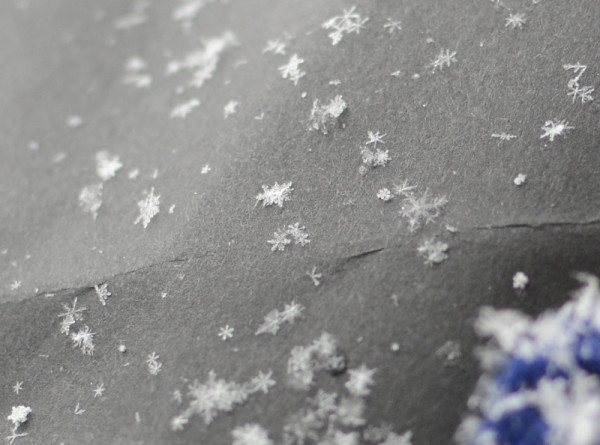
Then this week we kicked off the unit with the picture book Snowflake Bentley about Wilson Bentley, a man who lived in Vermont and spent his life photographing snowflakes to share their beauty with the world.
Homeschool Share offers a free lapbook to go along with this book and is where I found all the minibooks we used. We also perused the thousands of images in Wilson Bentley’s original book, Snow Crystals.
Learning about snowflakes and crystals
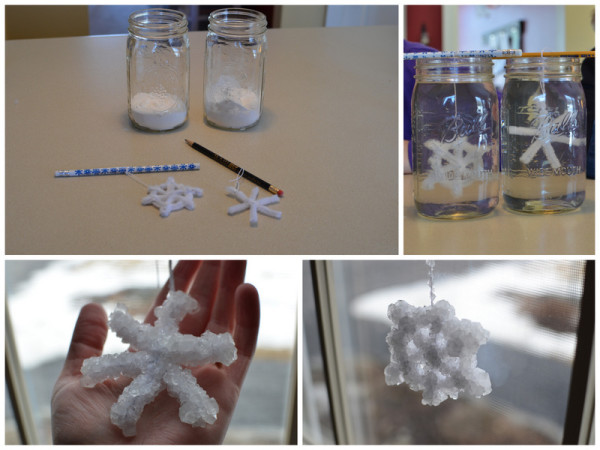
What better way to learn about crystals than to grow them? Making Borax snowflakes gave us the chance to watch crystal formation and drive home the main point: crystals arrange themselves into the patterns dictated by their molecules. While Borax crystals are simple cubes it is the same process that forms the intricate patterns found in each snowflake.
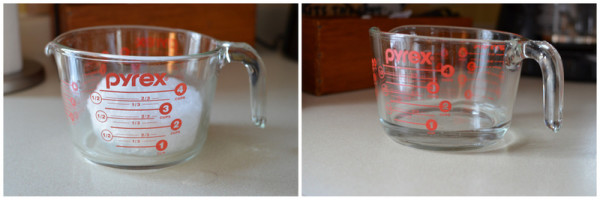
We brought in some snow and made guesses about how much water we would have when it melted. (All of our guesses were too high!) A nice printable from the Homeschool Share unit recorded the information. I used the physical demonstration from Living and Learning at Home to explain the scientific basis for it: we stood near each other with our arms out and realized we couldn’t stand very close to each other. With arms at our side we could pack ourselves in much more closely–just like the water molecules!
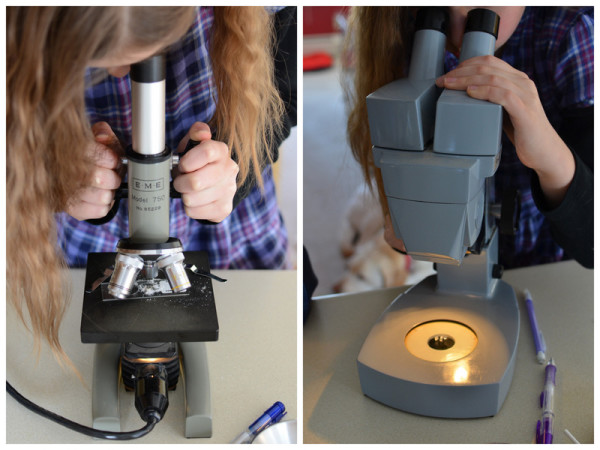
We brought out the microscopes to examine crystals of Borax, salt and sugar. My favorite part about using microscopes is how they increase our wonder at nature: when you see the tiny details you can’t help but be amazed!
Is it true that no two snowflakes are alike?
The book I used to cover the scientific information was The Snowflake: Winter’s Secret Beauty by Kenneth Libbrecht. This book was too advanced to be used as a read aloud, but was perfect for a picture walk. We looked at the images of modern snowflake photography and read the informative captions. This is great video clip about the author:
Once we learned about the factors affecting snow crystal formation, temperature and humidity, it was easy to understand the variety of patterns. As each individual snow crystal moves through different parts of the cloud due to wind and gravity the shapes on the branches tell the history of the conditions it went through. Since no two snowflakes follow exactly the same path to the ground, no two will be truly identical!
The Extras
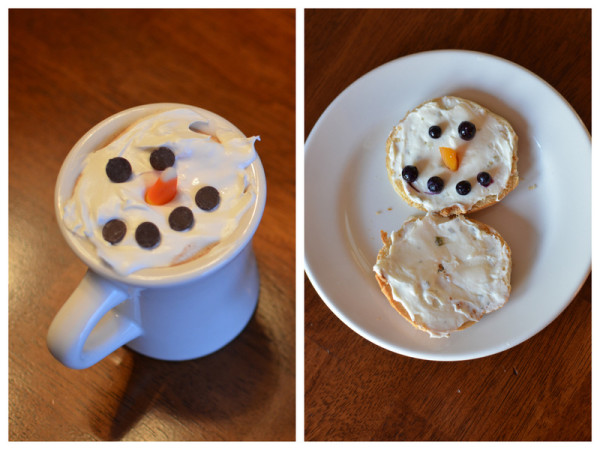
I usually can’t resist a little themed food when we’re studying a topic. Melted snowman cocoa and a snowman bagel fit the bill perfectly. The bagel face is made from blueberries and a piece of dried apricot. (Note: Be sure you have regular cream cheese for the bagel. Don’t be like me and only have chive and onion cream cheese.)
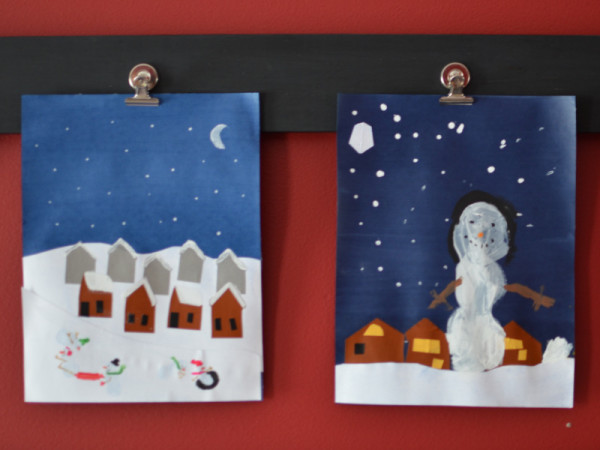
To finish the week we enjoyed a snowman art project from Deep Space Sparkle. She based it on the book Snowmen at Night, a delightful picture book we’ve enjoyed for years.
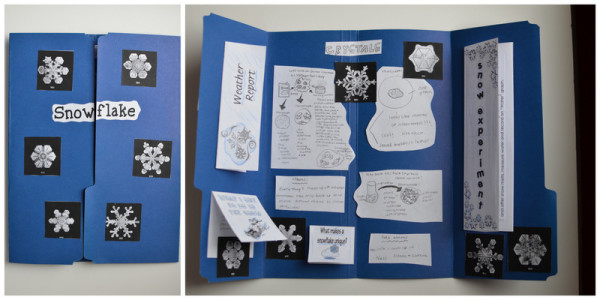
Inside my daughter’s lapbook you can see the minibooks from the Homeschool Share unit and drawings she made when we examined crystals under the microscope.
If you’re still in the throes of winter like me, take a peek at my Winter Activities Pinterest board. You’ll find ideas that are educational, crafty, and just plain fun!
I’m linking up with these great hostesses–join the fun and see what other homeschoolers are doing!

Snow, Celebrations, and Citizen Scientists
Last weekend we caught the end of the big blizzard. The amount of snow wasn’t that unusual for Maine, but the wind made it an extra fierce storm. 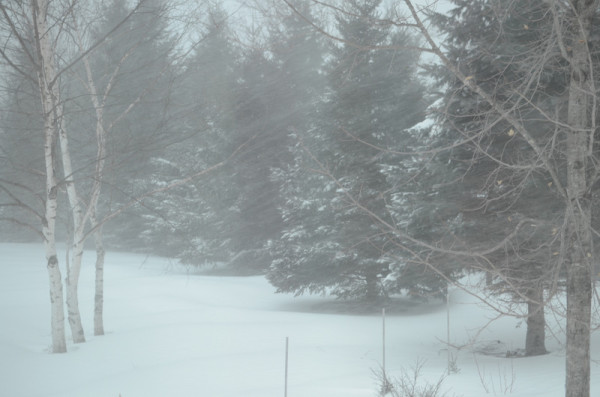
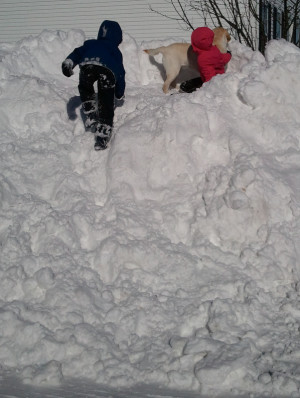
From inside our cozy house we fretted for the birds as they fought their way to and from the feeders. We watched the chickadees aim for one tree but end up blown to another. I was glad for the existing evergreens…and glad I planted over twenty more! After the storm passed this snow mountain was in our driveway and provided hours of building enjoyment.
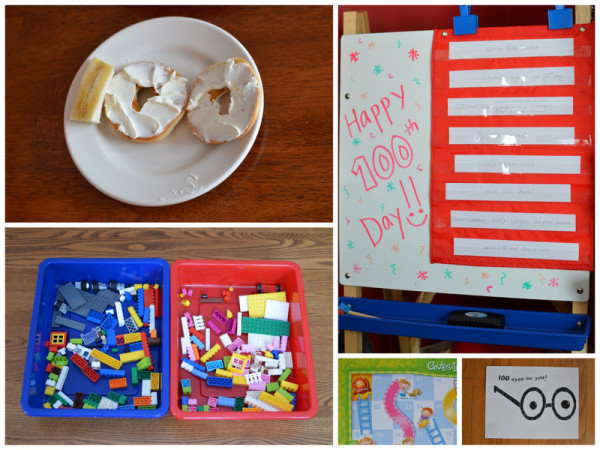
Monday we celebrated our 100th day of school. What a fun day to beat the midwinter blahs! (And yes, in Maine it is really only midwinter…spring is slow reaching us up here.) I detailed all our activities in that post, and would be happy for any new ideas I can put on my list for next year!
You know how you have those things about school you don’t want your kids to miss out on? Making and exchanging Valentines is one of those for me. Luckily a friend hosted a Valentine Party for about 20 kids and we spent the day crafting, playing games, and exchanging the sweet Valentines our kids had made.
Today we’re donning our citizen scientist hats to participate in the Great Backyard Bird Count. We’ll spend periods of time throughout the weekend with binoculars in hand, tallying what we see for the Cornell Lab of Ornithology to track bird populations. There is still time to participate, just check out the GBBC website!
Thank you to the wonderful hostesses with fun link-ups on Fridays. Be sure to join the fun and see what other homeschoolers are up to!
10 Ways to Celebrate the 100th Day of School
I make our 100th day a time to play with numbers and pat ourselves on the back for being over half way through the school year. It also lands perfectly in the winter doldrums, so it’s an opportunity to ditch the normal schedule and make it a special day.
Here are 10 ways to have a little fun on 100th day:
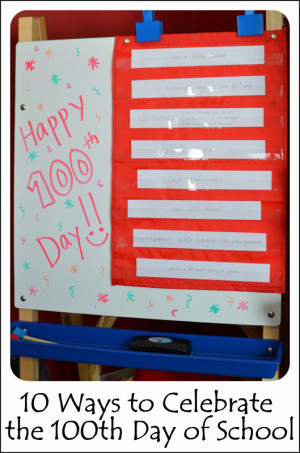
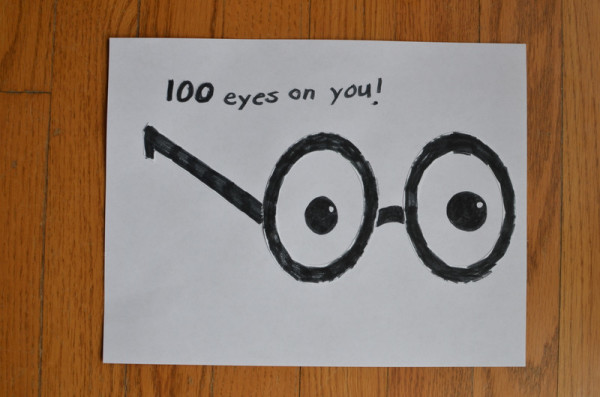
1. First of all, mark the day! Decorate–just a simple message on the white board, or even break out the balloons and streamers. I personally like making things a surprise, so I didn’t tell the kids ahead of time. They were pretty excited to walk into the schoolroom on a Monday morning to see our whiteboard pictured above. The pocket chart held the list of 100-themed activities we were going to do.
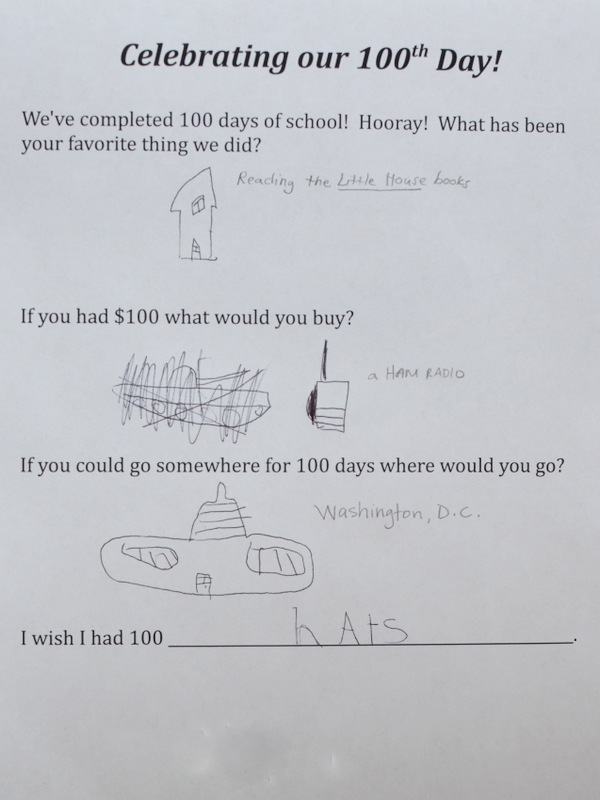
2. I type up a quick and easy list of 100th day questions. I’ve varied the questions, but basically ask about their thoughts on the year so far and then some 100-themed questions. What has been your favorite activity of our school year? What would you buy with $100? I would like to have 100 _______.
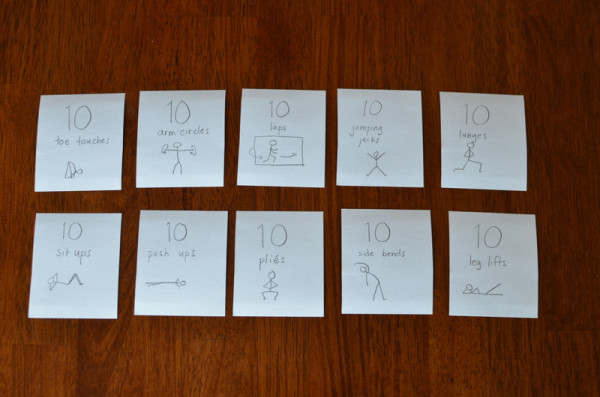
3. To get out the wiggles that can go along with a special day we did 100 exercises! I simply cut five index cards in half and on each half wrote an exercise we would do 10 times, then the kids took turns choosing a card.
4. Make a picture from the number 100! I gave each of them a big 1-0-0 cut out of paper and instructed them to make them into a picture. My daughter’s finished product really cracked me up!
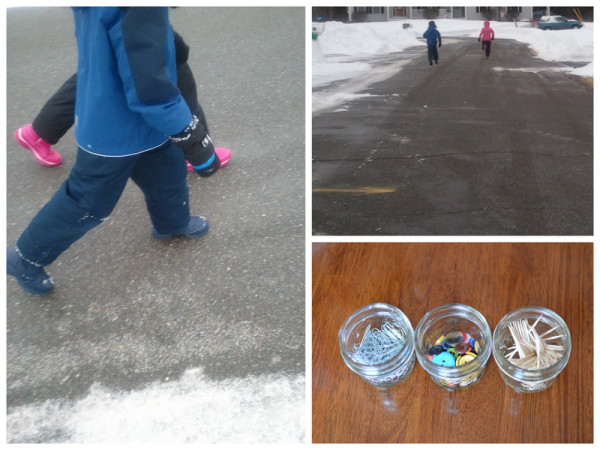
5. We had some fun with estimating. Which container has 100 items? How far will we go in 100 steps? How far can we run in 100 seconds?
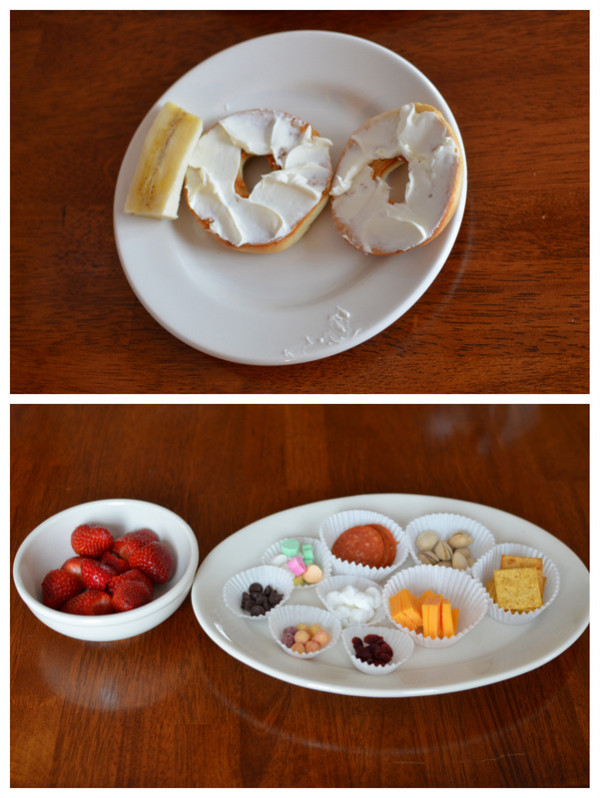
6. Lunch and Breakfast were 100-themed. Breakfast looked like the number 100 and lunch was 100 items!
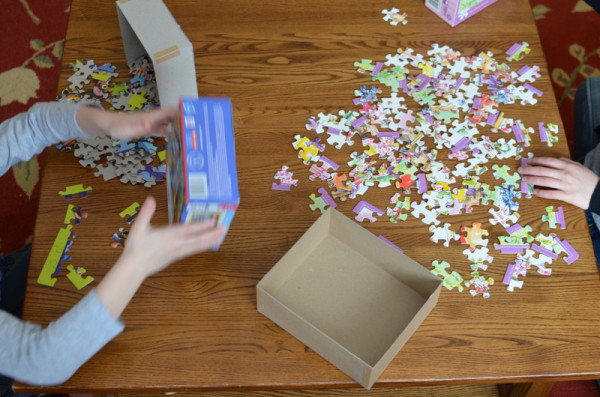
7. Each of them completed a 100-piece puzzle. (I read aloud while they worked–we can’t have a day without reading aloud!)
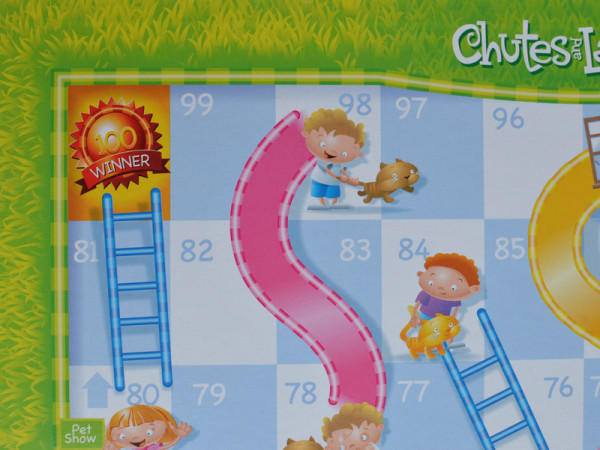
8. We played Chutes and Ladders, since there are 100 spaces!
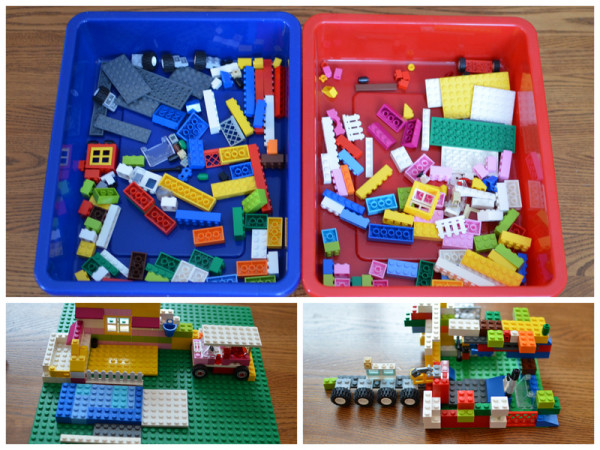
9. The highlight of the day was a Lego Challenge: What can you build with 100 Legos? To add difficulty I chose the 100 Legos and they had to build with just the ones in the tray and use every piece. My daughter built a car (with storage in the back–creative spot for the pieces she didn’t have a place for) and house complete with pool and side play yard for pets. My son’s creation was a factory. He turned his wheels into a conveyer belt!
10. Write a 100 word story or poem. We ran out of time before getting to this due to a large mountain of snow outside waiting to be made into a fort. I planned for this to be an optional activity, figuring my 10 year old daughter would be interested but not my 7 year old son. I will add this idea to the list for next year. My daughter writes very long stories, so I think having to choose words carefully and make it shorter would be an interesting challenge.
What ways do you celebrate the 100th day? I’ll need some fresh ideas for next year!
A Collage of Busy Hands
Our week was filled with hands-on activities. I love incorporating busy hands in our schoolwork–activities that reinforce the learning or create useful or beautiful items are always appreciated. And this week nearly every subject had us making and doing.
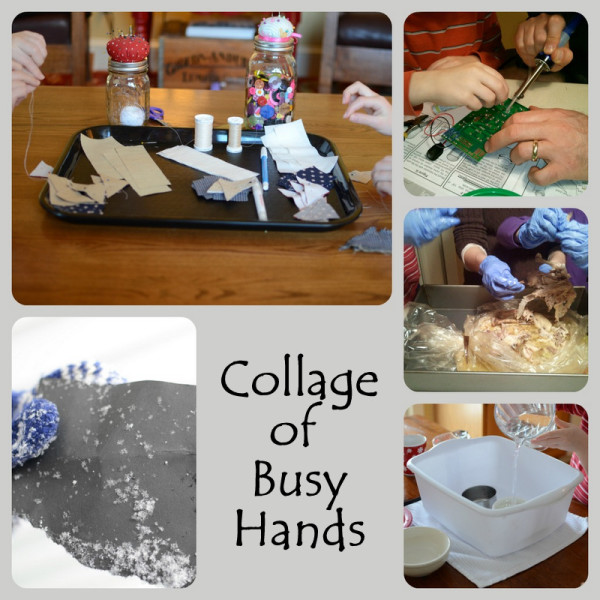
- Sewing a quilt square is a project from our Time Traveler’s unit on the 1800s. I adore doing crafts with my children that become keepsakes and this one fits the bill, along with showing them the work involved in the quilts that pioneer women made. We’re doing all the sewing by hand, just one or two squares at a time as I read aloud. They both enjoy it and are excited to see the pattern coming together.
- My husband and son (both quite electronically inclined and prone to gadget love) built an electronic kit to learn about soldering. This was their first foray into electronics together, they loved it and are working on another kit already. I have put in a request for a robot that cleans the house for me.
- We continued our bird studies by examining a chicken skeleton. Yes, it was our dinner. Yes, my husband gave me an odd look when I said we would bake a chicken for dinner so I could use the bones for schoolwork. Yes, my daughter thought it was gross–but then was fascinated by the experience. I’ll have a full post on our bird unit when we finish.
- More hands-on-math for my son: this time capacity estimation. I’ll also share more on that in a later post–just one note here: have towels handy.
- I’m preparing a snow unit study for a fun midwinter change. We’ll be doing it in two weeks and I had an activity in mind for the unit, but looked out Wednesday to see the perfect snowflakes falling. Reminding myself to be flexible we took advantage and spent time being amazed by nature and the seemingly simple but actually miraculous snowflake.
The neatness of our house suffered quite a bit along the way, but it was a good week. What are your favorite hands-on activities?
Thank you to the wonderful hostesses with fun link-ups on Fridays. Be sure to join the fun and see what other homeschoolers are up to!
Funnix Reading Program Review
My primary goal for my Kindergarten son was to learn to read. As a homeschooler who bases much of our curriculum around quality books, I felt strongly that reading skills are paramount and the best thing I could do to equip him to be a life-long learner. I also knew we would need all the help we could get! Like many boys he is wiggly, silly, and more interested in trucks and Legos than letters and sounds.
You can head over to read my review of the Funnix Reading Program at The Curriculum Choice.
Reboot a Bad Day
Yesterday was one of those days. Ever have those? It had started out well enough, and I had plans to get a lot of schoolwork done. But it seemed like the more I tried to tackle our list, no matter the subject or activity, the worse it went. By 1:00 we were all irritable and I had already given several stern lectures.
No one was happy, and I dare say no one was learning anything.
My first impulse was to send them up to their rooms and spend an afternoon completely alone…not really productive. There were still hours left until bedtime so I really needed to fix the mood of the day. We needed a reboot–a way to give us a completely fresh start midway through a day.
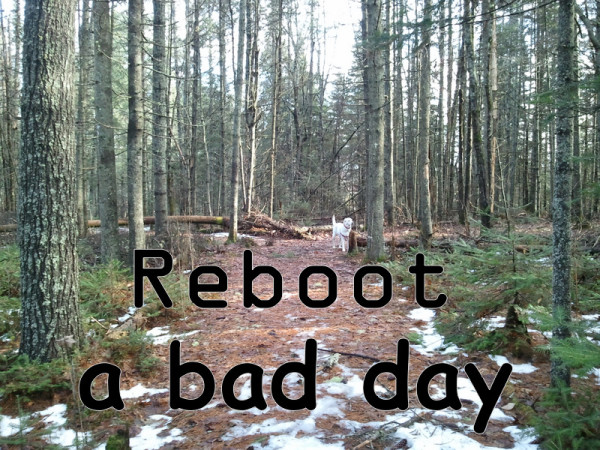
I told them to get ready, we were heading to the woods. It wasn’t great weather: warmer than usual, but very windy, and instead of sparkling snow there was only mud and dead grass. But I know time in nature is like medicine. I don’t reach for it as often as I should, or I go by myself for time alone, but everyone must go or it isn’t effective. I can return to the house and catch a bad attitude again very quickly.
We walked, ran, explored and laughed at our dog gleefully tromping through every wet spot she could find. We returned from the fresh air renewed and refreshed.
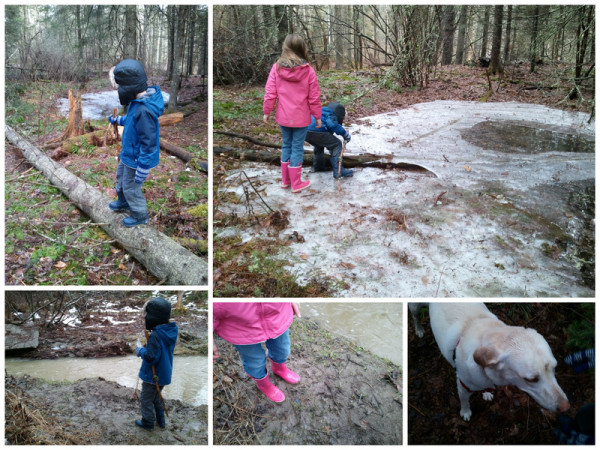
At home we settled in the living room to listen to an audiobook. As always we became caught up in the story and the afternoon passed happily away as our hands busily worked on different things: my son played in sand and built with Legos, my daughter drew, and I cut fabric for a project we’ll be doing together. The day ended happily and productively.
My original plan was not completed, but I’m sure we’ll fit those activities in another day. Better to do them later than to do them and have the reason for doing them lost. I am a list-maker, I love to cross things off my list, and I can also be quite stubborn. Sometimes on bad days I push ahead, forcing my plan on the day. But I am convinced that on those really bad days if I forge ahead no real learning will take place. They won’t remember the information, experiment, or activity if it’s done with a cloud of crankiness over us all.
Try a reboot when you’re having one of those days. You may have many items left on your list, the weather may not be perfect, and you may even need to drive to find a peaceful spot, but you may find it is just what you need to restart the day.
Hi, I'm Heidi and I homeschool my two sweet kids. I want them to know that learning is an exciting lifelong adventure! We love great books, unit studies, notebooking, lapbooking, and hands-on learning.