 Hi, I'm Heidi and I homeschool my two sweet kids. I want them to know that learning is an exciting lifelong adventure! We love great books, unit studies, notebooking, lapbooking, and hands-on learning.
Have Some Gooey Fun with Homemade Slime
The kids and I had to have a little fun on Halloween. We don’t enjoy the scary, gory side of Halloween, but a little slime is a lot of fun. This recipe came from my son’s preschool teachers.
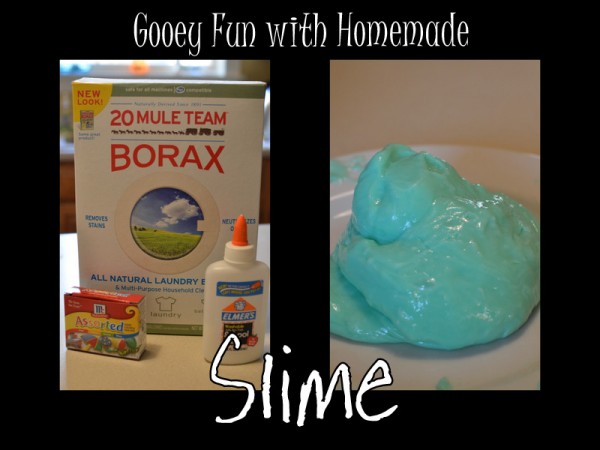
Ingredients:
- 8 ounces of Elmer’s Glue (must be Elmer’s)
- 1 cup cold water
- 1/2 cup hot water (not boiling)
- 1 tablespoon Borax
- food coloring
Directions:
- Mix the cold water and glue in a mixing bowl.
- In a separate bowl mix Borax and very hot water. Stir well until the Borax is dissolved.
- Add about 10 drops of food coloring to the Borax mixture. (For fun you can also add glitter now.)
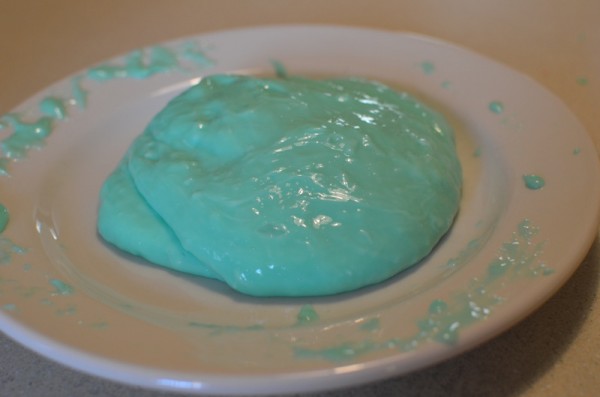
- Slowly add the Borax mixture to the glue mixture. Stir with a spoon for just a few seconds, then immediately mix with your hands. In less than a minute you’ll have a gooey, non-sticky, stretchy material.
- Store in an airtight container. Refrigerate when not using and it will keep for several weeks.
Have fun sinking your hands into this gooey, slimy concoction. It is icky and fun all at the same time. It’s fun to give as a little non-sugary treat, too. We’re bringing some to our friends today!
It will take on a shape for a moment…
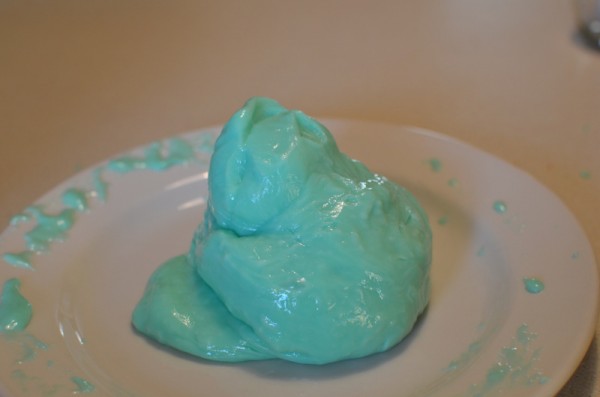
then slowly
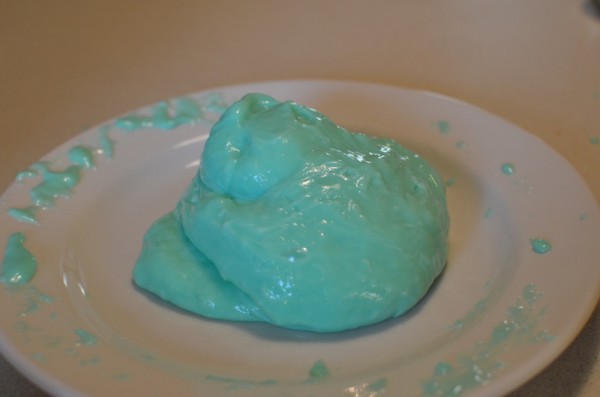
ooze back into a wobbly lump.
Happy Halloween!
Nature Study ~ Kicking Off Our Focus on Trees With Poetry
I’d intended to start our nature study focus on trees a couple weeks ago when the beauty of the fall leaves was at its peak in Maine, but we were very busy preparing for our science fair. Then my basement flooded and messed with all my plans!
To get back into the swing of nature study (and do something that didn’t require a lot of planning or knowledge from me) we took a walk around our neighborhood using the ideas in Barb’s Outdoor Hour Challenge #2, Use Your Words. My daughter recorded a list of the words that came to our minds when we looked at all the trees on our walk. Our neighborhood is fairly young (20 years), and though most house lots had originally been completely cleared there are woods surrounding the neighborhood and many lawns are adorned with a variety of trees. I’ve enjoyed paying particular attention to the variety of leaf color and timing for the change. Many trees in our neighborhood are now bare, but a maple in our back yard is just glowing with gold leaves now.
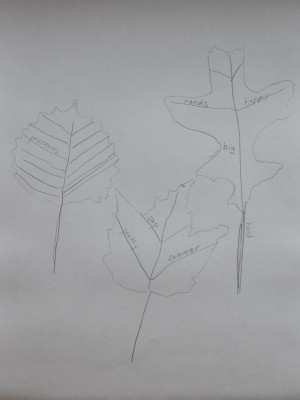
The next day as the rain poured down and the wind howled, we spent a cozy evening turning our words about trees into poetry using Barb’s free printable with easy suggestions. Each of us used a different idea. My son (age 7) traced leaves I had pressed weeks ago, added veins, and I wrote his selected words inside the leaves.
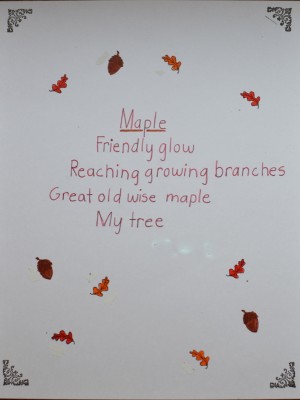
My daughter (age 10) was intrigued by the cinquain idea. I was very proud of her work.
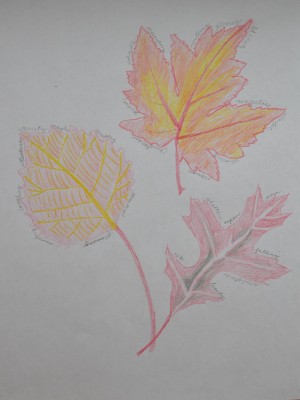
I joined the fun (the kids love it when I do). My particular interest was noticing the pattern of colors on each of the pressed leaves I traced. I wrote my words around the perimeter of my leaves.
Our poems are hanging on our wall, and we are excited to spend some time studying trees. Our first question: why do leaves change color?
Before I end I have to add a note. On our walk some movement in a fake spiderweb at a neighbor’s house caught my eye. I looked closer and realized a small bird was caught. Long story short, we had to help him. The neighbors were not at home, but with the help of another neighbor and her scissors we soon had this beautiful nuthatch free from the web. He was very shaken up but did not appear injured. After some time in a box and some conversations with a bird rescue organization he flapped away from us up into a tree.
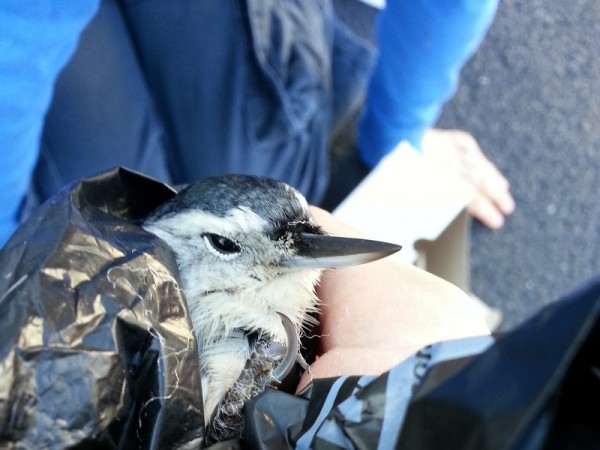
We had to leave an hour later and he was still there. We named him Webber and hope he goes on to live a long and happy life. The woman who answered my calls at the bird rescue organization told us that often owls get trapped and end up hanging for hours by a wing or leg. I tell this story because after we saw firsthand the danger of those fake spiderwebs to wildlife I said I’d spread the word. This is my little part of helping the birds.

Our Homeschool Journal: Our Mini-Flood
Most of my plans went out the window (or should I say into the basement) this week after finding an inch of water covering the floor throughout our basement. Mainers reading this may chuckle, since water in Maine basements is not uncommon. We’ve lived here five years and not had any, so I’d grown complacent and had lots of things in cardboard boxes on the floor. Needless to say it was all hands on deck to get what we could high and dry, and I spent any “free” time the rest of the week drying things out, cleaning to ward off mold, and generally reorganizing since it was such an overhaul anyway.
A basement clean-out was not on my to-do list this week. I am embarrassed to admit I was quite cranky about the job and that I had so much else to do, and, well, had a pity party for myself on several occasions. I often talk to the kids about not grumbling when given work to do. One of my favorite things is to quote Pa Ingalls: “What must be done is best done cheerfully.”
I was not a good example of that this week. Luckily, despite me having a bad attitude many things went well this week!
In our homeschool this week…
Much less schoolwork was done at home than I planned. However, my son wrote his first story he’d ever done on his own with invented spelling. The “flood” was quite exciting to him and he wrote about it while I was frantically working. He also taught himself counting by fives using the small numbers on his watch. Mind you, this is on my “list of math goals” to teach him but I did not assist with this is any way. He merely entered my room and rattled off until he reached 100 as I stood with mouth gaping. That little guy always surprises me.
I am inspired by…
My friend Leslie (who blogs at Maineiac Homeschoolers). She is leading our homeschool book club and our first meeting was outstanding! We all (moms included) started Reader’s Response Journals (you must read her post that describes the journals). Not only is it a great fit for our wide range of ages, but it’s one of those things I believe will become a favorite part of our homeschool and a treasured memento.
Places we went and people we saw…
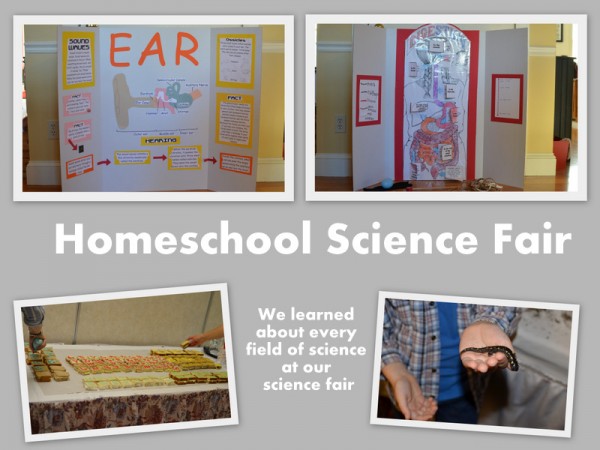
The big event this week was our homeschool group’s science fair. My daughter’s project was the ear and my son’s was digestion. (I posted yesterday about the hands-on digestion demonstrations that were a big hit.) A lot of work by a lot of families led to a very fun and educational day. My friend who arranged it is amazing–you can see the Periodic Table sandwiches she planned. We had projects on so many topics and even a wide assortment of live creatures. I’m already looking forward to next year!
As I mentioned we had our first book club meeting this week, and other than those two events much of our time was spent at home…in the basement.
My favorite resource this week…
Beakman’s World! Have you ever watched this show? He’s a zany guy with even zanier hair who is willing to do just about anything to teach your kids about science, and never in a boring way. His shows are all on Netflix and we watched several as we prepped for science fair. My kids get a big kick out of him, and on every episode there is something you can try at home. Probably the coolest one yet for us is building a camera obscura out of a box.
We’re reading…
We finished the audio version of On the Banks of Plum Creek and started By the Shores of Silver Lake by Laura Ingalls Wilder. We also finished Treasure Island. I just love reading these great books with my kids! I read Jamie Martin’s ebook Mindset for Moms. I enjoyed it and think I’ll re-read it frequently to remind myself of all the good advice.
I’m grateful for…
Living in an area where a little water in my basement and last week’s earthquake that caused no damage (and we didn’t even feel) seems like a big deal. We’re generally free from natural disasters…just three feet of snow in our big Nor’easters but you can sit by the fire and sip cocoa.
A photo, video, link or quote to share…
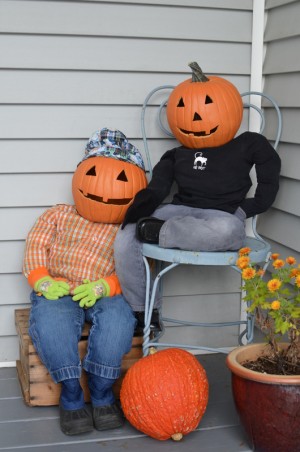
These guys took up residence on our porch this week (partly because the supplies to make them were in my wet basement). We do this every year and my kids love it. We fill old clothes of theirs with newspaper, and that is one of those fake pumpkins you can carve. We use those because they last longer and aren’t so heavy for the scarecrow to hold up.
Thank you to the wonderful hostesses with fun link-ups on Fridays. Be sure to join the fun and see what other homeschoolers are up to!

Digestive System Demonstration
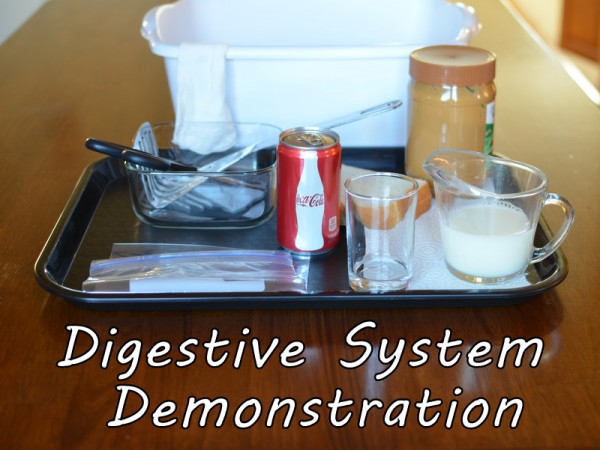
For our homeschool science fair my seven year old son’s topic was the human digestive system. He is a hands-on learner so I wanted him to have a physical demonstration to present. I wanted a demonstration he could do with very little help from me and explain to an audience. I’m happy to say that after several trials and adjustments at home his presentation at the science fair this week was a success!
Demonstrating the Steps of Digestion:
Want to show your kids the wonders of digestion? This demonstration was great in front of a group of kids, but simple enough to do at home, too. I am pretty sure my kids won’t forget the steps of the digestive process after this.
Supplies:
- small dish (large enough to use masher in)
- peanut butter sandwich
- small amount of water
- 1/2 cup milk
- scissors
- masher
- funnel (optional)
- quart size Ziploc bag
- Coke
- knee high pantyhose, or a leg cut off of child’s tights
- large bowl or basin
- tray with paper towels
Step 1: Explain that the small dish is like your mouth. Begin to cut the sandwich into bite-size pieces, explaining that the scissors are acting like your front teeth, which are designed for cutting.
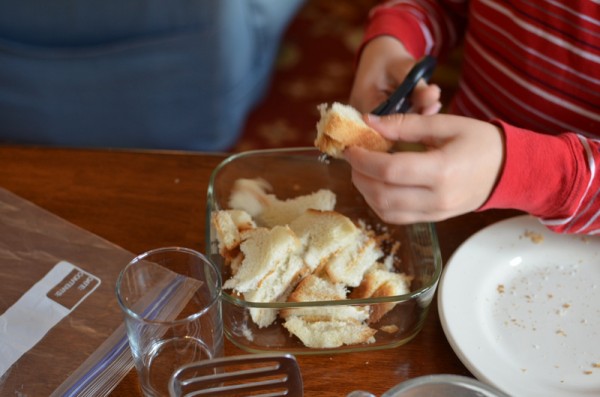
Step 2: Pour in a small amount of water. This is the spit. (Expect giggles here.)
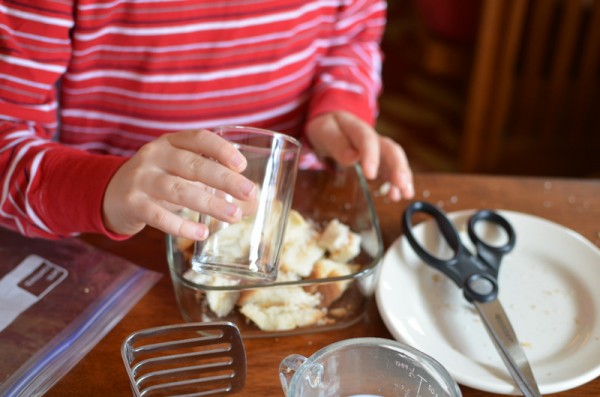
Step 3: Add about a half cup of milk. Peanut butter sandwiches can be a bit dry, you know.
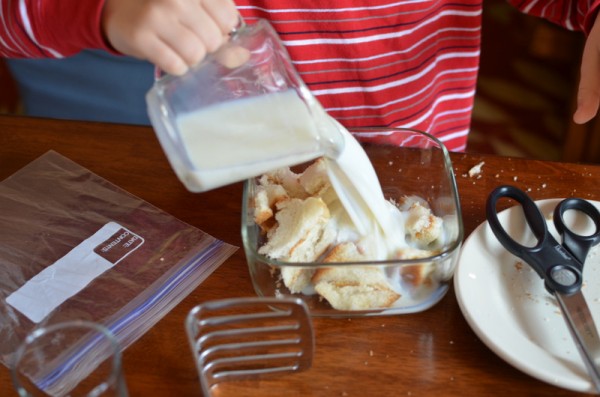
Step 4: Use the masher to mash the food and drink, explaining that the masher is like your back teeth which are designed for grinding up the food.
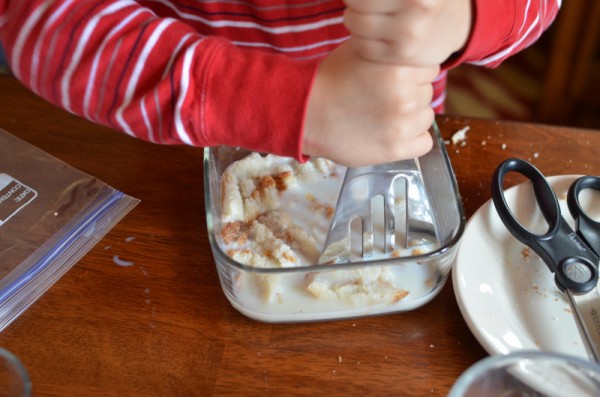
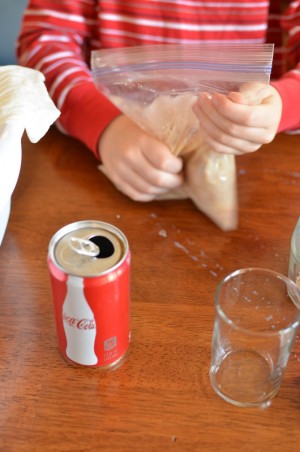
Step 5: Once the sandwich and milk resemble slop, empty it into the quart size bag which you can explain is like the stomach. You may dump it directly in the bag, or through a wide-mouth funnel to stand in as the esophagus. This process required an extra set of hands, thus a lack of photos for this step!
Step 6: Add a little Coke. Explain that the stomach has chemicals (acids) that break down the food. [Note: Saliva also works on food break down as do other enzymes and bile added in the small intestine–given the age of my son I kept it simple. You could certainly add a little green food coloring and talk about the liver, gallbladder and bile…then there’s the pancreas…]
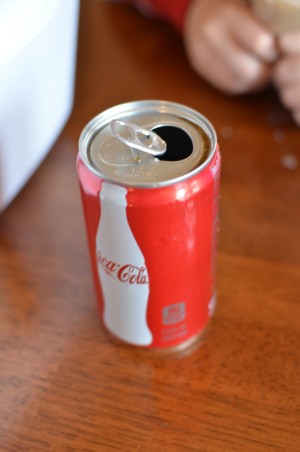
Step 7: Using your hands mix the food and Coke in the bag. Explain how your hands are working like the muscles in the wall of the stomach mixing and churning this slurry. This is when it starts looking a little gross. (Depending on your audience you could pause here and mention the process of vomiting.)
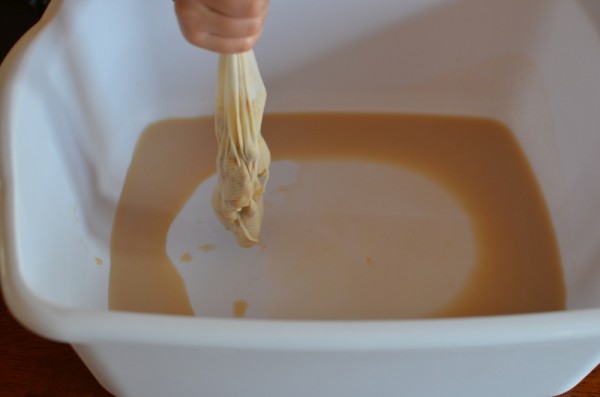
Step 8: Now the food is ready for the small intestine. Have your basin ready and pour your slurry into the nylon. Liquid will leak out through the material. You can explain that the fluid is like nutrients your body is removing from the food in the small intestine. Feel free to squeeze a little for effect.
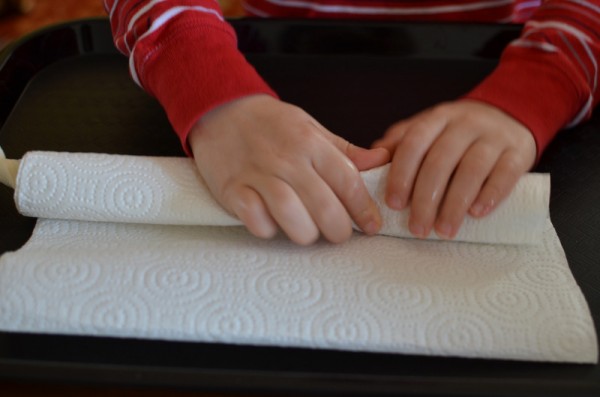
Step 9: Now for the large intestine. You could squeeze the food into a second nylon, but we just stuck with one and explained that the food was now moving into the large intestine. Lay the nylon on multiple paper towels layers and roll it up tightly, squeezing and patting as you go. Explain that our body takes all the available water out of the food that remains in the large intestine.
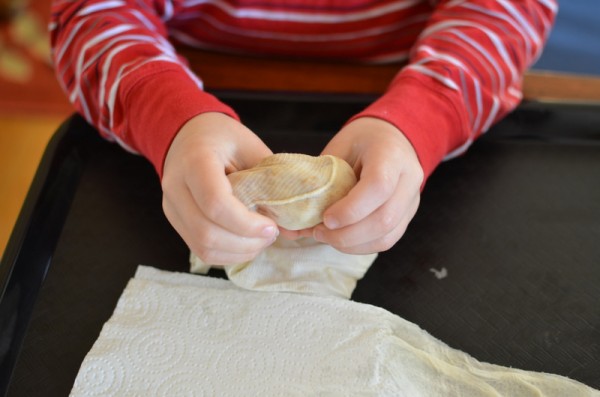
Step 10: That’s where we left it at science fair. We’re pretty relaxed around our house, especially in the name of science discussion. But I didn’t want to offend any other families so we chose our words carefully and left the “remains” in the nylons with a simple explanation that the next step would be the toilet. (You can cut a small hole in the nylon and demonstrate the working of the anal sphincter if you want to get technical.)
These are a couple of the websites and videos that gave me ideas to try: Teaching in Room 6, and this Squidoo lens.
In addition to demonstrating the steps in the digestive process we added two other hands-on components that were so simple yet illustrated so much.
Demonstrating Peristalsis:
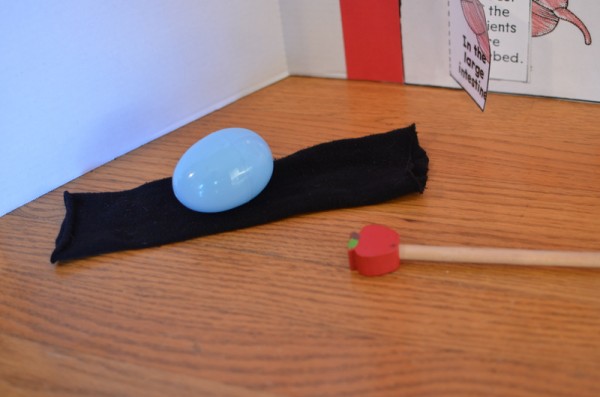
How does food move through the digestive system? It’s simple to demonstrate. Take a section of nylons or tights open at both ends and a smooth round object. I used my 10-year old daughter’s tights and one of the large plastic Easter eggs. Hold the section of tights up with the round item in it, showing that gravity is not forcing the egg through the tights. Using your hands you can demonstrate the contraction of muscles that pushes the food through.
Visualizing the length of the digestive system:
This one really floors the kids. The idea for this demonstration came from a combination of one of the hands-on labs included in our Real Science Odyssey Life Level One curriculum (a good example of the simple activities that curriculum includes for hands-on learning) and the Science Matters blog. We cut various strings and yarns to the length of the actual organs in the digestive system. I liked the idea of making each item a different color or thickness to more clearly show the relative sizes. This is an easy one to just use what you have (rope, yarn, string, twine, flexible tubing, even a bag or bottle for the stomach if you’d like) to demonstrate the true-to-life measurements of a child’s digestive system. My son LOVED unrolling this one at the science fair.
- mouth (3 inches)
- esophagus (10 inches)
- stomach (6 inches)
- small intestine (15 feet)
- large intestine (4 feet)
Trust me, everyone’s eyes get big when you unroll the rope and tell them that their digestive system is that long, all coiled up inside their body.
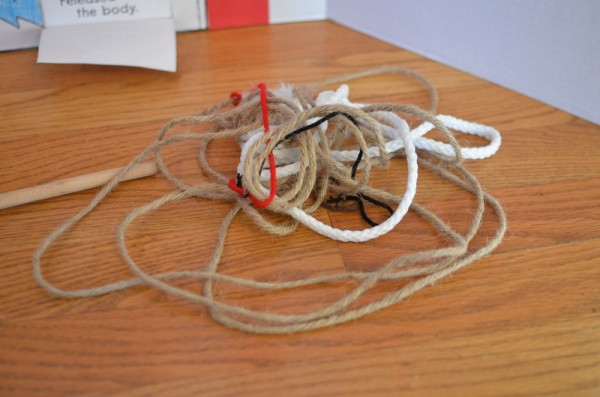
*Note: if you like using accurate vocabulary, this was a great way to also demonstrate the difference between the small intestine and large intestine. I used a thin rope for the small intestine and a thick rope for the large. It helped my son understand (and then explain to others) that the small intestine is actually much longer than the large intestine, but is smaller in diameter.
Resources:
Other than the specific resources I listed already, these are the books and other things we used to learn all about the digestive system.
Magic School Bus Human Body: I love this DVD, and in the episode called “For Lunch” the bus travels through Arnold’s digestive system.
Easy Make and Learn Projects: Human Body has a terrific digestive system poster with flaps. We blew this up and used it as our display at science fair.
Blood and Guts: This book has fun-to-read explanations and a lot of hands-on demonstrations and experiments for the entire body.
Kidshealth.org has a short video on the process of digestion.
Have fun with hands-on learning about the digestive system!
Our Homeschool Journal: Gearing Up for Science Fair
When I looked over our scheduled events for the week and also realized we needed time to prepare for the science fair we’re participating in next week I decided to throw our regular schedule out the window. I called it a “project week” but the kids ended up calling it “fun school.” Part of me wishes we could roll this way all the time, but those pesky math facts and grammar rules just won’t let me do it.
In our homeschool this week…
Our work at home has been all about the science fair we’re participating in next week. I’m so excited and thankful for a veteran homeschool mom who put the whole thing together. I’ve always wanted to have a reason to buy those three-panel display boards! I’ll share all the details on our projects when they’re complete.
We also followed a little interest-led learning after a mild earthquake hit Maine this week! It’s effects didn’t reach our area, but my mother called when she felt shaking at her house. My husband did a mini-unit with the kids on earthquakes to answer all their questions. Believe it or not, in a huge coincidence my son had picked out an earthquake nonfiction book at the library last week. We also watched a Bill Nye earthquake video on YouTube.
Places we went and people we saw…
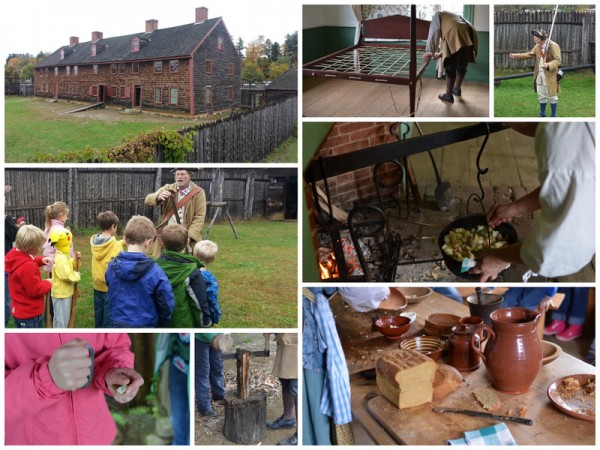
One of our major events was a field trip to Old Fort Western in Augusta, Maine. Built in 1754 it’s New England’s oldest surviving wooden fort. Dad joined little brother as he experienced life as a soldier, including drills and moving and firing a cannon. Big sister and I dove into household chores: working in a smoky kitchen, tightening a rope bed, even chopping wood for the fire. Any time I feel overwhelmed I need to spend a day living the life of colonial women.
We also had Girl and Boy Scout meetings, my daughter’s book club, a homeschool group meeting, and took a day today to visit Grandpa for his birthday.
We’re reading…
In honor of Mary at Homegrown Learners and her posts about reading aloud, I thought I’d share a little more in-depth on what we work on for read alouds. Reading aloud truly is the backbone of our homeschool, and almost anything we’re learning about starts with books. Here’s a collage to illustrate what I mean:
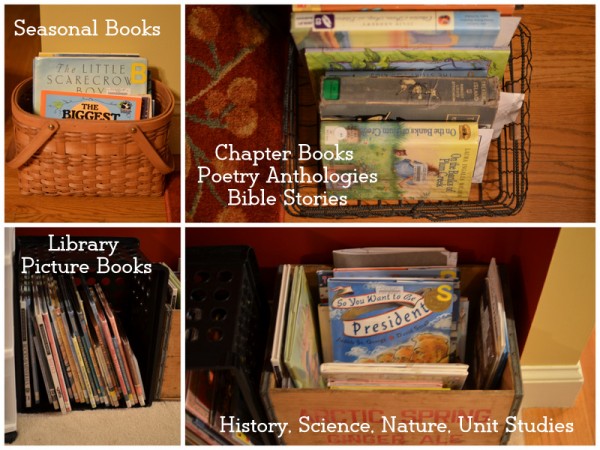
There is a basket of seasonal books just for fun in the living room; right now they’re about fall and Halloween. I am slightly addicted to picture books for holidays and have a closet where I keep the off-season books, plus I also grab more at our library. Beside the couch is a metal basket with our morning books (poetry and Bible) along with our current family chapter books (Treasure Island, On the Banks of Plum Creek).
In the schoolroom there is a crate of library books–you never know what you’ll find here, but we usually have 30-50 books checked out at one time. I love my small-town library and the wonderful librarians there! Mary is so right when she says they are a valuable resource. Lots of these are just for fun, whatever the kids or I see that’s interesting on our regular library trips. (Like the earthquake book!) Also in the schoolroom is a wood crate with specific books I’ve chosen to go along with our studies. For instance right now it holds books for our Government and Elections Unit Study, Brazil for Geography Club, and our upcoming nature study focus on trees.
Thank you to the wonderful hostesses with fun link-ups on Fridays.
Be sure to join the fun and see what other homeschoolers are up to!
Geography Resources: Brazil

A group of homeschool moms and I formed a geography club this year. We were looking for a way to get together regularly for something educational but not expensive or requiring extensive planning. We meet weekly in a room we reserve at the library, and we focus on one country for the whole month. Each child is responsible for bringing something to share about the country–anything goes! I thought I’d share some of the resources I found and things that were shared at our club meetings.
This month the country was Brazil!
Internet Resources:
Education Place is my go-to for printable outline maps, available with and without labels.
Homeschool Share’s Brazil Lapbook page has maps and minibooks.
Jolanthe at Homeschool Creations posted about her Brazil unit and offers a free map and flag printable, along with other links and ideas.
National Geographic Kids is a terrific resource for great photos, information, and even a short video.
Erica at Confessions of a Homeschooler shares about their study of Brazil. She wrote her own “Expedition Earth” curriculum and Brazil is the country she offers as a free preview! Her family made an amazing multilayer diorama of the rain forest.
Books:
We own a Children’s Atlas of the World (ours is no longer available on Amazon) as a reference book. I appreciate it’s colorful pages, maps decorated with small pictures of animals, landmarks, agriculture, industries, or architecture specific to an area, and even some project ideas. A children’s atlas is a great place to start for a quick overview of a country and to see what items may pique your children’s interest.
Magic Tree House Research Guide: Rain Forests: I love the nonfiction companion books in the Magic Tree House series (sometimes called “research guides” or “fact trackers”). We enjoy the chapter books but usually only read them once, while the nonfiction books I enjoy adding to our library. It’s nonfiction but still has the personality of the characters that makes it a more interesting read for kids. This one has great information on the amazing features of rain forests. Of course, rain forests are located in many parts of the world so this book isn’t specific to Brazil, but a study of Brazil isn’t complete without studying the Amazon Rain Forest.
Children Just Like Me: This book gives kids a window into the lives of children around the world. For Brazil the child is a member of the Tembe Indian tribe in the Amazon rain forest. Considering that it isn’t a good representation of life for the children in the large, populated cities of southeastern Brazil, but certainly a very unique lifestyle.
Cultures of the World: Brazil and Children of the World: Brazil are reference books we checked out from our library. They’re long and full of information, so we usually do a picture walk and just read pieces of interest as we go through.
Geography Club Meetings:
Just in case you want to start a geography club of your own, or just have some fun with your own children, these are some of the activities we enjoyed and information we shared on our month-long Brazilian study.
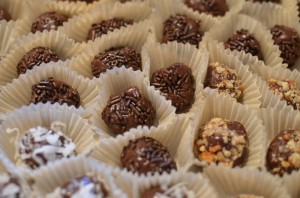
- Brigadeiros: two of us chose to bring these chocolate treats to one of our meetings. They are simple and rather tasty, and kids can help shape them into balls and roll them in toppings. We used this recipe from All Recipes. Interesting note: these are served at children’s birthday parties and are expected, much as someone in America expects a birthday cake.
- Children’s birthday parties in the larger cities are a large event requiring a rented location, hired entertainment, and lasting well past most of our children’s bedtimes. This blog post gives a humorous look into what a huge event the parties can be.
- Sugar Loaf Mountain is a landmark as you enter the harbor for Rio de Janeiro.
- Also in the famous city of Rio is the Christ the Redeemer statue, measuring over 100 feet tall and nearly 100 feet from fingertip to fingertip.
- The rain forest is teeming with amazing creatures: we shared mini reports on two:
- The goliath bird-eating tarantula, which is up to 12 inches long including its legs. There is an amazing video from National Geographic, but be cautious if your children are sensitive as the large, creepy spider does catch his mouse prey: goliath tarantula video.
- The red-eyed tree frog, a creature that is more on the “cute” than “creepy” side. There is great information and a video on National Geographic kids: red-eyed tree frog video.
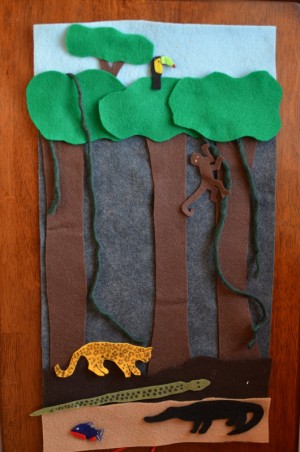
- Speaking of the rain forest, we actually shared this rain forest felt play set in our book club last year when we read the Magic Tree House Afternoon on the Amazon. I cut all the shapes out of felt and went over the layers of the rain forest and animals that live there using the play set.
- Our friends shared children’s games common in Brazil: “Vivo ou Morto” (dead or alive, which reminded me of a cross between Simon Says and Red Light, Green Light) and Cinco Marias (like Jacks with stones).
- We learned to say hello in Brazilian Portuguese, and also to count to 10. We practiced this by tossing up a balloon and counting our hits aloud.
- Our soccer-loving member shared about Pele, the famous soccer (or should I say “futebol”) player from Brazil. They had read the book Pele, King of Soccer.
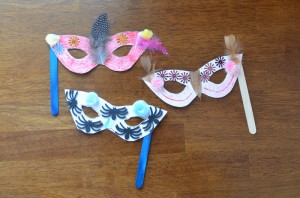
- Brazilians are well known for their celebration of Carnival (a four day national holiday just before Lent). Since Brazilians wear costumes to celebrate Carnival, our friends bought supplies to make Carnival masks for one meeting. They brought stiff paper mask templates and things like pom poms, feathers, sequins and stickers to decorate them.
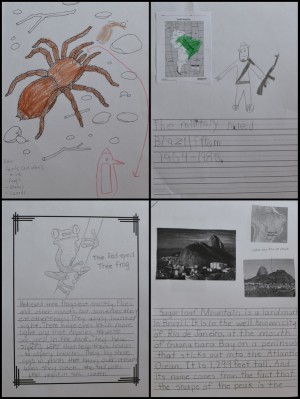
*As a side note: notebooking is one of my favorite and most-used homeschool tools. It can work for any age, any subject! I had my children complete notebook pages for topics we studied about Brazil, and they shared from these at our meetings. Then we’ll include those notebook pages in our binders at home. (Notebooking pages used were free resources from Jimmie at the The Notebooking Fairy, Donna Young, and a coloring page found via a Google Image search.)
We all enjoyed our first month of geography club. In addition to being able to get together regularly with friends and learning about a different country, it gave our kids a low-key way to practice public speaking.
Next month: Egypt!
Our Homeschool Journal: Enjoying Fall
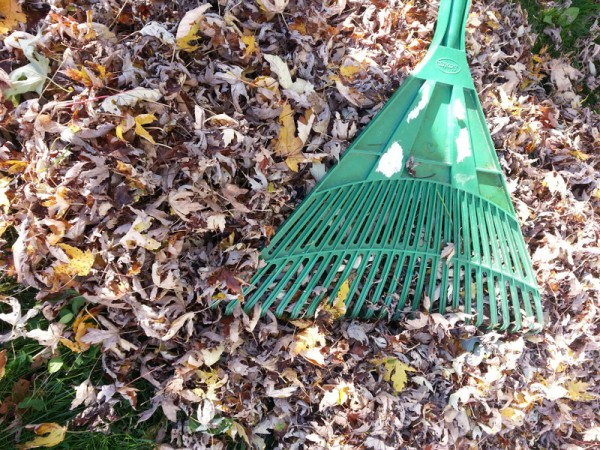
I just love fall! We’re enjoying everything autumn while we can…it seems to fly by in Maine and then winter arrives! Of course there’s lots of raking and jumping:
In our homeschool this week…
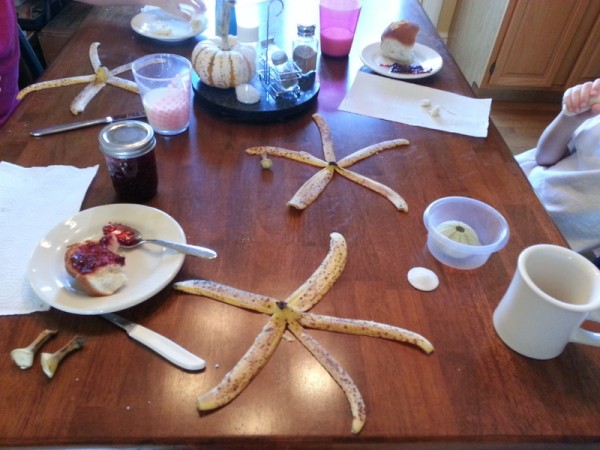
In RSO Biology we continued our study of animals and learned about echinoderms. The lab using a banana peel to explain their shape turned breakfast into science class!
I’m thankful again for our experiences at the ocean this summer because as we’re learning I can remind them of the real creatures we saw.
My daughter and I are really enjoying WriteShop Junior D. I need to post a full review soon–it’s one of my best curriculum finds to date. As we were finishing lesson 2 this week one of the publishing options for her humorous story was to make it into a comic. We used a printable comic template and she’s been working hard on speech bubbles and character drawings!
Donna Young and her incredible site is my favorite resource this week. I benefited from her free printables three times this week: once for the comic template, once for a monthly calendar, and lastly for a page with a blank top for illustrating and lines below for writing. And she had that one with lines in varying sizes so I could find one for both of my kids.
Places we went and people we saw…
We finished with Brazil at geography club this week. We’ve learned a lot about this country in a fun way. Topics covered at the meetings have included the history, geography, landmarks, animals and language of Brazil. We’ve played games, made Carnival masks, and tried foods from the country. I’m so glad we found homeschool friends and are able to get together regularly. It’s a sanity saver, and when we combine the socialization for kids and adults with learning opportunities it’s a double bonus!
My favorite thing this week was…
Fall is perfect hiking weather because it is isn’t hot or buggy, and the views with changing leaves are breathtaking. We headed to Acadia National Park for our longest hiking excursion yet and had a terrific time. First off we went up Flying Mountain to take in the views of Somes Sound and offshore islands. The hike itself wasn’t very long, but did involve a bit of actual climbing up and over rocks. My kids thought this was very exciting.
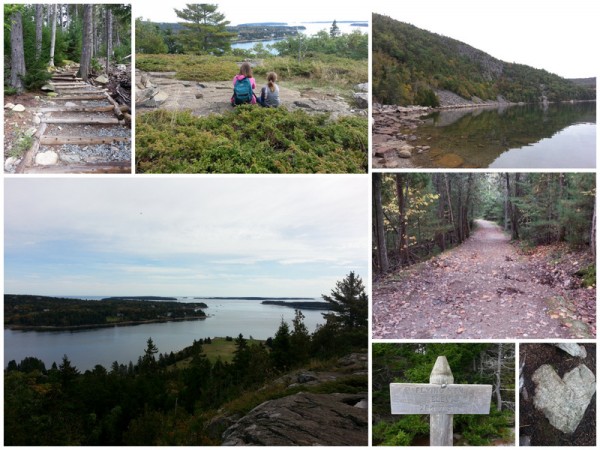
The hike was not long, so we had lots of exploring time at Valley Cove. This hermit crab became a nature study topic:
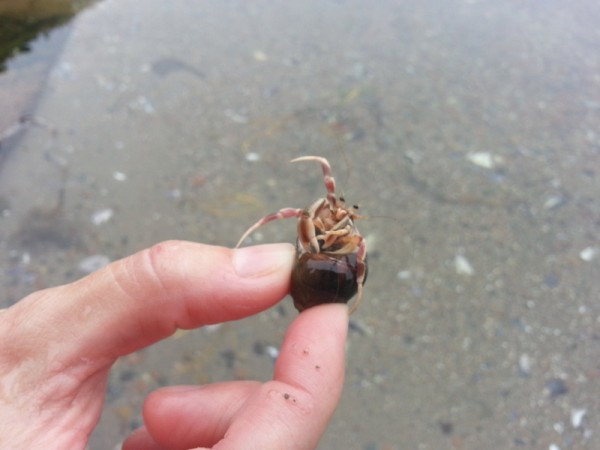
He (and dozens of his friends) fascinated my kids. He looks quite irritated with me, doesn’t he? The homeschool mom in me couldn’t help but point out that he is an Arthropod just like insects. Crustaceans are like the insects of the ocean! They loved the idea of him looking around for discarded shells. I rounded it out at home with a couple library books as their interest continued: The Crab on the Seashore & Eric Carle’s A House for Hermit Crab for fun.
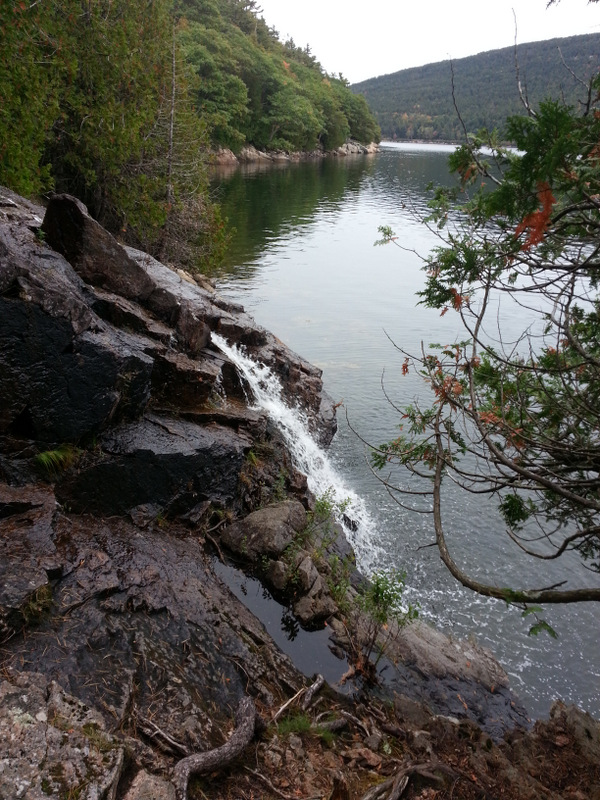
I’d been mistaken and told the kids we’d be seeing a waterfall, which although in Valley Cove is actually on a different hike. When we finished the first hike everyone was willing to try the second, so off we went. The historic information I read spurred me on: the waterfall is called Man O’ War Brook waterfall because British war ships used Valley Cove for shelter and would replenish their drinking water using the falls. What a great story, and though the waterfall is small it was well worth the effort to get there.
Things I’m working on…
I’m still working on our family mission statement and a revamp of our chore system. We’ve had a lot of great discussions about our family and household this week. The overriding goal for me right now: do the best I can to use my time wisely, keep my priorities in proper order, and retain the joy in the process. Lofty goals, I know!
I’m reading…
My current reading goes along with those goals. I finally finished For the Children’s Sake. It’s a meaty book and I want to add it to my bookshelf so I have it to read over again periodically. I am more convinced that Charlotte Mason is a match for our style in many ways, and understanding that helps me make decisions about where to focus our time and energy. Up next for me is a collection of ebooks I purchased in a benefit sale this week. I’m excited to dig in because many of the ebooks relate to getting it all done (time management, freezer cooking, cleaning) and enjoying life, too.
Our family continues with Treasure Island and On the Banks of Plum Creek. There were so many cries for “you can’t stop reading there!” this week that I wish we could just read all day. They’re both great stories. My daughter is still reading Poppy by Avi for her library book club, and now Little House by Boston Bay (about Laura Ingalls’ Grandmother) by Melissa Wiley.
A photo to share…
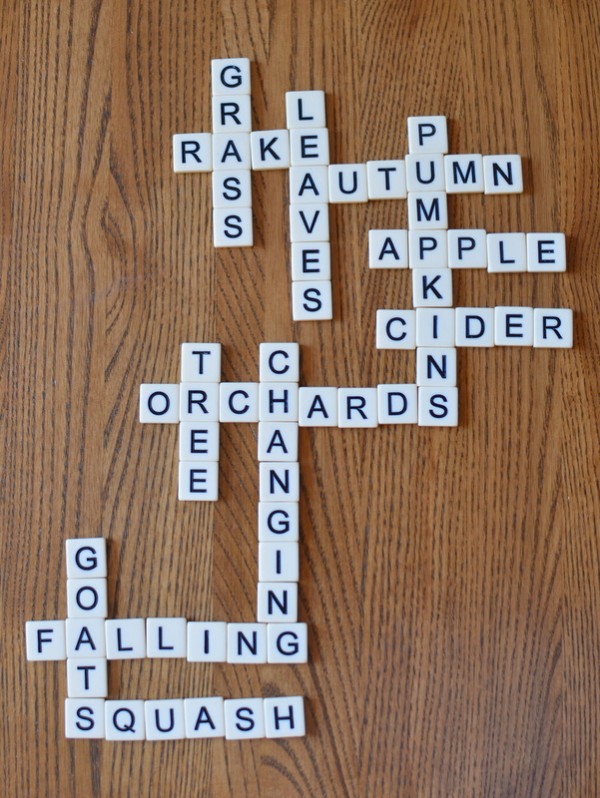
I love playing Bananagrams with my daughter. We enjoy Scrabble, but since my son is too young to play it’s hard to fit in long games that don’t include him. Bananagrams is short so it’s easier to fit in. We also love just playing with the tiles. Frequently I’ll give my daughter a theme and she can use all the letters to make intersecting words about that theme. This week called for a “fall” theme.
In case you missed it…
Yesterday I posted 10 fall arts and crafts ideas. Making things with my kids aligns with my goal of keeping joy in our journey!
Thank you to the wonderful hostesses with fun link-ups on Fridays.
Be sure to join the fun and see what other homeschoolers are up to!
10 Crafts & Art Projects to Enjoy For Fall
We’re deep into fall here in Maine: the leaves are brilliant and the air is crisp! I love fall and one of the ways we savor it is with crafts and art projects. There’s the beauty of autumn to celebrate, along with Halloween and Thanksgiving. Making things is a way to slow down and enjoy the season and holidays. It’s great for fine motor coordination and creativity…and it’s just plain fun! Here are some projects we’ve done, and some we hope to do this year:
Fall:
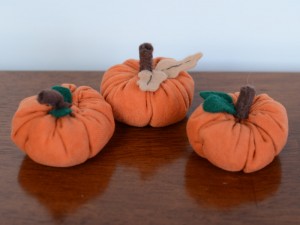
1. Fabric pumpkins: We all enjoyed sewing these adorable pumpkins last year. They’re easy and make perfect decorations to tuck in here and there or give as a gift. The only thing we changed was using a rolled up piece of brown felt as the stem.
2. Acorn cupcakes: We made these cupcakes topped with a Hershey Kiss and Nilla Wafer acorn at a “Mommy and Me” cupcake decorating class in our town–they were cute, delicious, and easy!
3. Tricia from Hodgepodge generously shares many free pastel tutorials. We already tried our hands at the chalk pastel apple, and the tutorial for a fall tree looks beautiful, too.
4. Art Projects for Kids has several good tutorials to help celebrate the beauty of the season: how to draw a fall tree (my daughter used the easy instructions for drawing a tree’s basic shape last year), how to draw a pumpkin, and my must-do for this year, a scarecrow portrait using Sharpie markers, crayons and watercolors.
Halloween:
5. We made these recycled jar jack-o-lantern luminaries last year with a little Mod Podge (love that stuff!) and tissue paper.
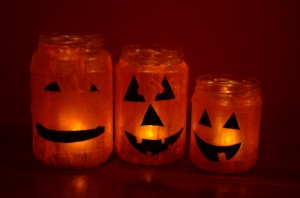
6. Bat mobile: This year I want to sew this more-goofy-than-spooky bat mobile. These will be so cute hanging around the house!
7. Making mini pumpkins from acorns is a must this year–they’ll be perfect for my daughter to use to decorate her wooden doll house. (Be sure to read the comments on that craft about checking your acorns for insects!)
8. My kids love pop-up cards so these haunted house pop-up cards are a perfect project for a quiet afternoon.
Thanksgiving:
9. These wooden turkeys made from a 2×4 may be our cutest Thanksgiving project yet. It took a few days to finish and left lots of room to personalize. You use scrap lumber (mine wasn’t actually a 2×4, but a 1×4), popsicle sticks and a paint stick.
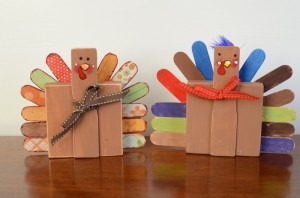
10. Oreo turkey pops don’t even require real cooking. Some day I want to try making cake pops, but these are darn cute and way easier.
Check out my Fall Arts & Crafts board on Pinterest for more ideas.
Too many crafts, too little time!
Our Homeschool Journal: Celebrating a Birthday
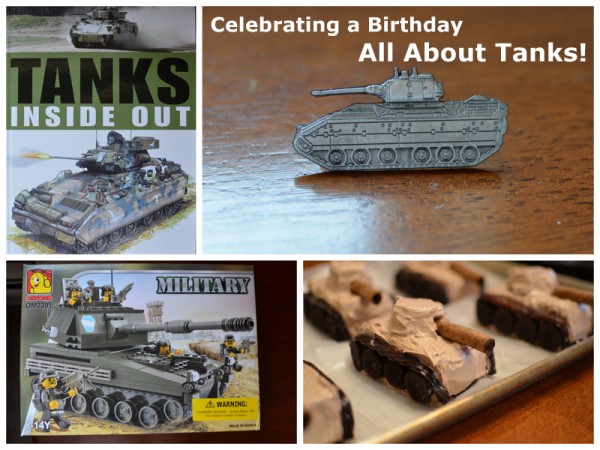
This week my baby boy turned seven. Considering his current tank obsession much of our celebrating revolved around tanks. I made little tank cakes, and his gifts included many tank-related items. His fascination with tanks is completely self-driven, and we just supply the tools. He can rattle off the names of tanks, which country used them and in which war. He’s learning so much and he’s proud of his expertise. It’s a joy to watch our children develop into such unique individuals!
In our homeschool this week…
The three R’s rolled along smoothly (hooray!), but with scheduled events and a birthday celebration we didn’t accomplish a lot of extras. A little history (a great book called Old Ironsides: Americans Build a Fighting Ship), a little nature study (we found grubs, the larval form of Japanese Beetles that are wreaking havoc on lawns), reading aloud, and preparing for our weekly geography club (we learned about rainforest animals).
I am inspired by…and therefore am working on…
Colleen at Raising Lifelong Learners wrote a great series of posts on a “Back to Basics” approach to family life and homeschooling. I enjoyed all of the posts, and plan to implement many of her ideas.
Step 1: a family mission statement. I pored over her ideas and also posts from Simple Mom and Confessions of a Homeschooler (she has a pretty printable one) and have been discussing it with my family. My boys (both my son and my husband) like to crack jokes during serious discussions, but I’m going to persevere and get ideas from everyone to include in our mission statement. Coupling this with a revamp of our chore chart (inspired by Mary) and Colleen’s plan for Easy Discipline (earn an extra chore to make it up to the family) and I’m hoping things will run a little more smoothly in our home. Or at least I’ll nag less and the bathroom counters will get wiped down more often!
Places we went and people we saw…
We had many of our scheduled events this week: library book club, Cub Scouts, piano lesson, Geography Club, and a homeschool group playground meeting. Dentist appointments filled up an entire afternoon. Add to that celebrating a big boy turning seven and we had a very full week!
My favorite thing this week was…
The morning of my son’s birthday as we sat working on building a tank I heard the bus coming. I yelled, “Oh no! You’re going to miss your bus!” He played along and pretended to run to the door. We both grinned and realized how happy we were to be together. And perhaps he was happy for the no-schoolwork-on-your-birthday rule.
My favorite resource this week is completely working for us!
Teaching Textbooks. One week into it my daughter and I both love it. You can read my full post on our curriculum change from Khan Academy to Teaching Textbooks here.
We’re reading…
Still the same books! I am moving through For the Children’s Sake slowly–partly because I don’t have much reading time for myself, and also because I read it slowly, going back over sections that are especially applicable to our homeschool.
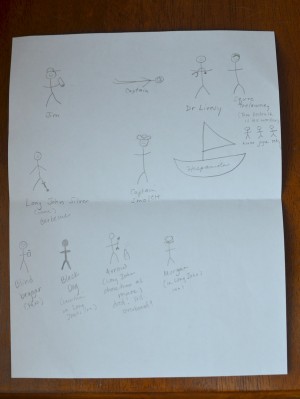
We’re well into the voyage to Treasure Island, and I’ll share a picture of a little cheat sheet I made for us to keep the characters straight. My son has an especially hard time remembering names so I made this character map with stick figures to remember who was who. No laughing.
I’m grateful for…
Our healthy baby boy born seven years ago, who tells me I’m the best mommy.
Thank you to the wonderful hostesses with fun link-ups on Fridays. Be sure to join the fun and see what other homeschoolers are up to!
Our Switch to Teaching Textbooks
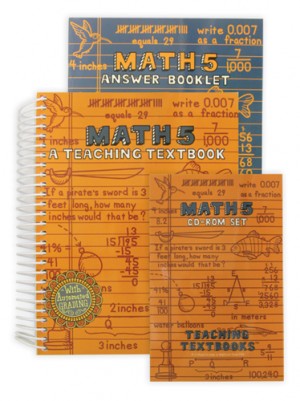
I mentioned in last week’s journal that we had to make a curriculum change already in math, from Khan Academy to Teaching Textbooks. If you’re interested in the long version of that story, here goes:
I did not struggle with math in school. Not that it was a subject I enjoyed, but it wasn’t difficult for me to do well in school. My daughter is the same. No struggles, but no great love either.
Enter homeschooling. I did lots of research and chose Singapore Math and we slogged through for months. I disliked preparing my lesson, and consistently found I am not a good math teacher. I know the information and understand it, but fumble when trying to explain it. My daughter hated doing pages of workbook problems, and I didn’t enjoy grading them.
Finally my husband persuaded us to try Khan Academy, a free website with math videos beginning at addition all the way to high school and college math topics. You watch the instructional videos and then do practice problems until you show mastery.
To our surprise we loved it! If you’ve ever watched a video or talk on Khan Academy you’ve probably heard the term “flip the classroom.” It means the students watch instructional videos to cover math topics and the teacher in the classroom is there to help with questions or problems. This arrangement fit us perfectly. She got a coherent lesson from a math expert. I could listen if I need a refresher, and then be there to clarify or assist. The fact that it was free was the icing on the cake.
We used Khan Academy as her main math curriculum last spring and over the summer. I noticed a couple problems during the summer (yes, we school year round!). First one of the suggested activities involved questions far above her math level (interest on a loan). Second, working our way to fractions sequentially through Khan’s Knowledge Map was taking a long time–it was difficult to introduce the concepts of fractions she should be covering for 4th grade math without getting into higher level math that she wasn’t ready for.
Before the school year I researched profusely and had analysis paralysis. I researched so much I couldn’t settle on something. As we entered our full time school routine the main problem arose. When my daughter sat down to work on math she became frustrated with not having clear goals or a direction to follow. I needed to help her pick which modules to work on and sometimes I wasn’t sure what she should do. Initially the “suggested activities” worked well, but as she’d worked on the site longer it didn’t seem it was suggesting what she actually needed to learn next. In short, we weren’t covering the topics she needed to be working at grade level.
Finally I realized we needed a different solution. After much research (again) and pulling my husband in for mental assistance we went went back to the drawing table. My main requirement: video instruction. Our choices were Saxon (with the DIVE CD’s), Math-U-See, and Teaching Textbooks.
We ruled out Saxon after reading too many negative reviews. The reviews about kids really disliking math, “kill and drill,” and even some families reporting they burned the workbooks when they quit scared us.
Math-U-See was very appealing to my Charlotte Mason side. After watching many of the available demo videos we decided it was so different that it would require too much backtracking to explain Math-U-See’s system, terminology, and manipulatives at my daughter’s level.
That left Teaching Textbooks. I read glowing reviews and we watched demo videos from the company and videos made by users on YouTube. Several bloggers I respect use it (Jimmie, Barb, Tricia), and it’s also recommended as part of the Sonlight program. We decided to take the plunge. Placement tests put my daughter at the 5th grade level (Math 5).
Do we hope this will be the math curriculum we can stick with? Of course! Do we still have concerns? Yes. The biggest are the reviews I read saying Teaching Textbooks is “behind” or that children who use it don’t test well in math. I’ll be combating those concerns in several ways:
- She’s already starting a grade level ahead of where I expected, so that may explain the “behind” concern.
- We’ll still be using Xtramath for math fact memorization.
- We administer standardized testing yearly so I should spot any testing problems early.
- I’ll keep my eye on Common Core Curriculum standards and our public school district’s math curriculum to be sure she is covering grade level topics.
- We’ll keep Khan Academy and its videos in our pocket as a supplement.
- Lastly I plan to supplement with Life of Fred. I am very intrigued by the author and his approach. I have the elementary Apples book that I’m working through with my seven year old son. I am not confident enough to use it solely, but I think the story aspect will appeal to my daughter, and the focus on understanding math will be a great supplement.
So there’s the long version of our math story. Any one else already have to make a curriculum change?
Hi, I'm Heidi and I homeschool my two sweet kids. I want them to know that learning is an exciting lifelong adventure! We love great books, unit studies, notebooking, lapbooking, and hands-on learning.